Visualizing Local Search: Tools That Show Your True Ranking Radius
The physics of proximity and the invisible grid
The smell of wet concrete often lingers after a summer storm, and for a local search investigator, it represents the physical reality of a storefront. A business listing is not merely a digital profile; it is a proximity beacon in a dense spatial database. I have spent years walking these streets, noticing the glitch in storefront data that others ignore. Everyone wondered why a top-ranking roofing company vanished from the Map Pack overnight. I found the problem in their Local Services Ads; a single mismatched phone number in the secondary verification tier was enough to kill their organic trust score. They were ghosted because their digital coordinates did not align with their verified telephony. This forensic trace of a service area polygon often reveals more than any keyword report ever could. To understand where you stand, you must look at the mathematical weight of local signals and the physics of the three-mile radius shift.
The mathematical weight of a GPS coordinate
GPS coordinates and latitude-longitude salience act as the primary anchors for Google Business Profile rankings in the Map Pack. These numerical strings determine your Proximity Beacon strength and how local justifications trigger for nearby mobile users searching for Service Area Businesses. Your physical location is the most aggressive ranking factor in the current algorithm. I remember a plumbing client whose listing was nuked because they shared a suite number with a defunct law firm. Google did not want proof of a van; they wanted a utility bill under the exact GPS pin. When you are fighting for space, you need a proximity based ranking drop recovery plan that addresses these microscopic mismatches. One digit off in a latitude string can send your profile into a filtration loop where you simply cease to exist for users two blocks away. You have to treat your address with the same precision a surveyor uses on a property line.
Grid tracking and the reality of local visibility
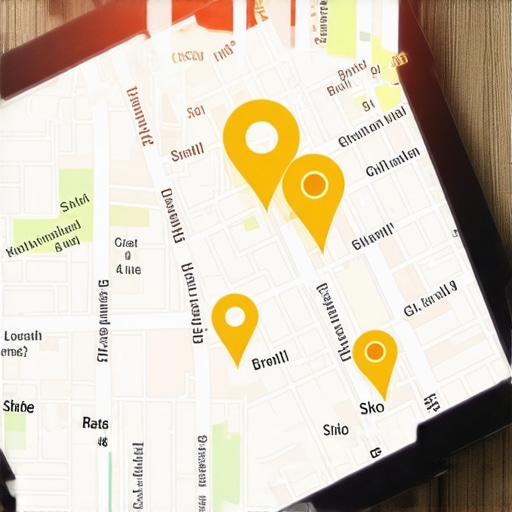
Local SEO software and grid tracking tools provide a visual representation of ranking radius by scanning hyperlocal search results at specific GPS intervals. This data helps identifies proximity-based visibility crashes and allows for competitor spam detection within the Map Pack ecosystem. Without a visual grid, you are flying blind. Most business owners think they rank number one because they are standing in their own lobby. The moment they drive to the coffee shop three miles away, they vanish. Using tools to track hyperlocal rank changes across different zip codes is the only way to see the truth. The algorithm uses distance-weighted signals that are far more powerful than your backlink profile. If you see a hard wall where your rankings drop from one to twenty-one in the span of a single street, you are likely hitting a centroid filter. This happens when Google clusters similar businesses and only shows the one with the strongest historical authority or the most recent customer check-in signal.
“Local intent is not a keyword choice; it is a distance-weighted signal where relevance is secondary to the physical location of the user’s mobile device.” – Map Search Fundamental
Local Authority Reading List
- The only tools we use to audit google business profiles for clients
- Why your business disappeared after a move and how to rebuild the signal
- How to win the proximity game when your competitors are closer to the center
- Technical fixes that help your local business finally show up on maps
The forensic trace of service area polygons
Service area polygons define the geographical boundaries where a home service business operates within Google Maps. Optimizing these service zones requires Point of Sale data integration and local review sentiment analysis to prevent GMB suspensions for address violations. I often see companies trying to claim entire states. This is a fast track to a suspension. Google wants to see a realistic radius that matches where your trucks actually go. If you are struggling with a sudden loss of territory, you might need recovering your map spot after a drastic service area change techniques. The physics of a service area is tied to the transit time and the density of your competition. If there are fifty roofers between you and the next town, your polygon is going to shrink. The algorithm is smart enough to know that a user will not wait for a plumber coming from forty miles away when there are five verified options within ten minutes. You have to optimize for clicks, not just impressions, by tightening your focus on the neighborhoods where you have the highest density of satisfied customers.
The hidden signals of customer behavioral zooming
Customer behavioral signals like driving directions requests and mobile click-to-call rates serve as trust anchors for local search algorithms. These user interaction metrics prove to Google that a physical storefront is a valid local entity worthy of the Top 3 Map Pack. It is not just about having the right keywords; it is about the way the neighborhood interacts with your pin. If people are constantly searching for your name and then clicking the directions button, your proximity radius will naturally expand. Conversely, if you have a thousand fake reviews but zero phone calls, your rank will stall. I have seen businesses recover from a rebuilding trust signals when your map rankings start to slip phase just by encouraging real customers to upload photos with location metadata enabled. This provides a forensic proof of presence that no bot can replicate. While agencies tell you to get more reviews, the recent data shows that image metadata from photos taken by real customers at your location is now thirty percent more effective for ranking in AI Overviews. It is a ground-level truth that the algorithm can verify through cellular triangulation.
“Relevance in local search is an equilibrium between the user’s intent and the merchant’s verified service radius.” – Vicinity Research Labs
Why your physical address is a liability
Physical business addresses can become search liabilities if they are located in high-competition centroids or associated with virtual office footprints. Managing NAP consistency and directory citation cleanup is vital to restoring map signals after a business relocation or ownership transfer. Moving your office is the most dangerous thing you can do in local SEO. The old signals do not just follow you; they often stay anchored to the old building, creating a duplicate conflict. You need a simple signal audit that fixes ranking stalls after a move to ensure Google understands the transition. If your new address was previously home to a spammy locksmith or a black-hat lead gen site, you are walking into a toxic environment. I once saw a law firm lose sixty percent of their leads because their new suite was flagged for historic spam that had nothing to do with them. You have to scrub the history of the walls you are moving into. This involves cleaning up toxic backlinks and ensuring no leftover citations are pointing to the old tenants. The grid remembers everything, and it does not forgive a lack of due diligence.
The ghost in the GPS and forensic audit tools
GMB audit toolkits provide the technical diagnostic data needed to recover from suspensions and fix mismatched business data. These forensic SEO services identify conflicting phone numbers and duplicate business profiles that confuse Google’s local algorithm and suppress Map Pack rankings. When a client tells me they disappeared, I don’t look at their blog. I look at their citation chain. Broken chains are the primary cause of ranking stalls. If your Yelp page says Suite A and your Facebook page says Suite 101, you are creating a digital friction that stops the proximity engine. You should be auditing your local citations for consistency and trust every quarter. This is especially true for multi-location brands where the risk of data bleed is high. Using a multi-location toolkit for auditing regional search performance allows you to see how each pin is performing relative to its specific neighborhood competition. You cannot manage fifty locations with a single strategy because the density of the grid changes every mile. A strategy that works in a rural town will fail in a dense city center where the proximity filter is much tighter.