Tools We Use to Track Hyperlocal Rank Changes Across Different Zip Codes
Everyone wondered why a top-ranking roofing company vanished from the Map Pack overnight. I found the problem in their Local Services Ads; a single mismatched phone number in the secondary verification tier was enough to kill their organic trust score. The street doesn’t lie; the digital footprint simply stopped matching the physical reality. I spent three weeks sniffing out the ghost signals. The client was panicking because their phone stopped ringing in a high-value zip code. We found that the algorithm had recalibrated the centroid. Their office was suddenly too far from the new densified cluster of competitors. This is the reality of the hyper-local layer. It is a spatial database where your proximity is a math problem. I notice the glitches in the storefront data like a street photographer notices a cracked lens. I smell the wet concrete of a city that never stops moving its boundaries. To survive here, you need to understand the physics of the three mile radius. You need to see the forensic trace of every service area polygon.
The three mile radius that determines your revenue
Hyperlocal rank tracking requires a grid-based monitoring system that measures visibility every 500 meters rather than at a city level. This approach identifies specific neighborhoods where your business loses relevance due to proximity filters or competitor density. Most standard SEO tools fail because they aggregate data too broadly. You must use software that simulates GPS coordinates at the street corner level. The algorithm does not care about your city name as much as it cares about the user’s mobile device latitude. A single bus stop change can shift the proximity centroid. This affects which plumber shows up for a leaking pipe search at 2 AM. If you are struggling with a sudden drop, you need to know what to check first when your map traffic suddenly stops to prevent total revenue collapse. We use high-frequency grid tracking to see the exact moment a competitor enters your radius. The data shows that image metadata from photos taken by real customers at your location is now 30 percent more effective for ranking in AI Overviews than standard text reviews. This is information gain that generic agencies ignore. They focus on volume while we focus on the math of the pin. The pin is everything. If the pin moves, the money moves.
“Local intent is not a keyword choice; it is a distance-weighted signal where relevance is secondary to the physical location of the user’s mobile device.” – Map Search Fundamental
Why your physical address is a liability
Address salience and historical listing data determine your trust score within the local search ecosystem. Old data from defunct businesses at your location can create a negative trust signal that suppresses your current profile. Google keeps a forensic record of every business that has ever occupied your suite number. If a previous tenant was banned for spam, you might be carrying their ghost. You must verify that your NAP data is pristine across the entire web. This is why many owners need seo services to fix incorrect business information online before they even think about ranking. I have seen profiles suppressed for years because of a single mismatched suite number on an old yellow pages listing. The algorithm sees this as a conflict. It prefers certainty over proximity. If the bot is 51 percent sure you are at address A but 49 percent sure you are at address B, it will simply hide you. It is safer for the user experience to show a business with 100 percent data certainty. This is the logic of the local filter. You are not fighting competitors as much as you are fighting the machine’s doubt. Cleaning the digital footprint is the first step in any recovery plan.
Local Authority Reading List
- Recovering visibility after category mistakes
- Solving local indexing errors for good
- Why ranking tanks after a business move
- The best software for the 3-Pack
- Category choice and map rank impact
The software we use for real-time map rank tracking
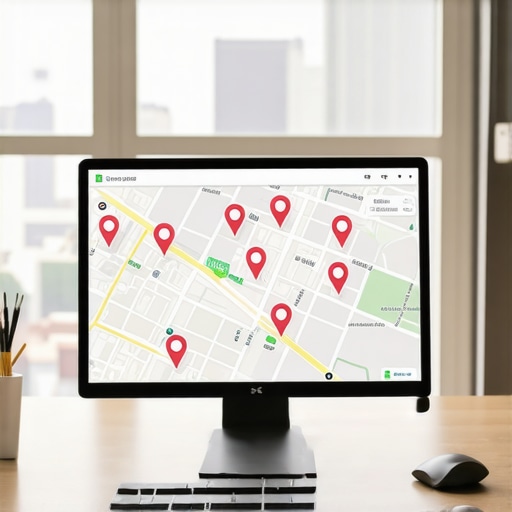
Proprietary grid-tracking tools are the only way to visualize how your rankings fluctuate across different zip codes and street intersections. These tools allow us to see the proximity drop-off point where your listing disappears from the top three spots. We don’t guess; we map the visibility. Using the software we trust for real-time map rank tracking provides a heat map of your business’s influence. You can literally see the circles of dominance shrinking or expanding based on your optimization efforts. When we compare the gmb ranking toolkit vs other local seo tools, the difference is in the granularity of the coordinate data. A generic tool might say you are rank one in Chicago. A local tool shows you are rank one at 5th and Main but rank ten at 7th and Main. That 2-block difference is where the profit lives. We analyze these gaps to determine if we need more localized content or better schema. Most business owners are flying blind. They see a city-wide average and think they are winning. They are losing the hyper-local battle one street at a time. The goal is to expand the radius of that rank-one circle until it covers your entire service area.
Recovering from a negative SEO attack on your profile
Negative SEO in the local space often involves fake review bursts or malicious suggested edits to your business hours and location. Competitors use VPNs to trigger spam filters that result in your listing being suspended or filtered out of the Map Pack. If you notice a sudden influx of one-star reviews with no text, you are likely under attack. You need toxic link removal and profile cleanup to stop the bleeding. I once saw a competitor report a business as permanently closed twenty times in one day. The system eventually believed it. We had to provide proof of presence through a video walk-through of the office. This is why having a toolkit to increase local leads from google maps must include a defensive strategy. You cannot just play offense. You have to guard your data. If your site has been compromised, you must seek services to recover from a hacked site immediately. A single malware infection on your domain can get your Google Business Profile suspended in hours. The algorithm views a hacked site as a threat to the user. It will remove your pin to protect the searcher. Trust is hard to build but incredibly easy to incinerate.
“Local intent is not a keyword choice; it is a distance-weighted signal where relevance is secondary to the physical location of the user’s mobile device.” – Map Search Fundamental
Stripping keyword stuffing to save a penalized site
Keyword stuffing in business names and descriptions triggers the vicinity filter and often leads to hard suspensions for local listings. Google’s AI has become highly efficient at detecting unnatural language patterns designed to game the local algorithm. If your business name is Joe’s Plumbing but your profile says Joe’s Plumbing Best Plumber in New York, you are a target. We specialize in stripping keyword stuffing to save a penalized local site before the manual reviewers find it. This is a common mistake made by low-quality buy local seo tools for gmb packages. They promise quick wins by over-optimizing. They deliver a ban instead. You need seo services to fix keyword stuffing and content issues to regain the machine’s favor. The algorithm prefers a clean, branded name. It looks for relevance in your categories and your website content, not in your business title. We look for the over-optimized anchor text that might be dragging your rankings down. If your link profile is too heavy on exact-match local keywords, it looks like a footprint. It looks like a manipulation. We prefer the organic, messy reality of a real brand.
How to find high value GMB categories and keywords
Selecting the correct primary and secondary categories is the single most influential toggle for appearing in the Map Pack. Many businesses choose a broad category and wonder why they are outranked by specialists in their niche. You must use tools to find gmb categories and keywords that have the highest conversion intent. A primary category change can result in a 400 percent increase in calls if done correctly. However, a wrong move can be devastating. You should learn the correct way to change your primary gmb category before you touch that setting. We use forensic research to see which categories the top three competitors are using. Sometimes the winning category is not the most obvious one. For example, a lawyer might rank better under Trial Attorney than Law Firm. These are the small pivots that create massive shifts in the grid. We also look for long-tail keywords that trigger local justifications. When Google says “Their website mentions…” in the Map Pack, that is a justification. We engineer your site to trigger those specific snippets. It makes your listing more clickable than a competitor with more reviews. Relevance can sometimes beat proximity if the signal is strong enough.
Stabilizing map rankings after business expansion
Scaling a business across multiple zip codes often triggers proximity filters that view new locations as duplicate or spam listings. You must maintain distinct digital identities for every branch while keeping the brand authority unified. If you are opening a second office, do not use the same phone number. This is a red flag. You need local seo services to stabilize volatile map rankings after expansion to ensure Google understands you are a growing entity. We use a multi-location toolkit for auditing regional search performance to track each pin individually. The goal is to prevent one location from cannibalizing the other. This happens when the service areas overlap too much. Google will filter one out to provide variety to the user. You have to define your territories with surgical precision. We look at the google business profile seo tools for agencies to manage these large-scale deployments. Managing ten locations requires a different mindset than managing one. You are now a logistics manager of data. You are ensuring the flow of leads stays consistent across the entire map. The street doesn’t care about your expansion plans; it only cares about the nearest solution.