A Proximity-Based Ranking Drop Recovery Plan for Local Businesses
A Proximity-Based Ranking Drop Recovery Plan for Local Businesses
I spent three months fighting a hard suspension for a plumbing client whose listing was nuked simply because they shared a suite number with a defunct law firm. Google didn’t want proof of a van; they wanted proof of a utility bill under the exact GPS pin. I stood on that wet concrete sidewalk and took a photo of the faded numbers on the door. It smelled like rain and city exhaust. Through my lens, I could see the glitch in the data. The map showed a business that technically existed in a digital void because its coordinates were overlapping with a ghost. This is the reality of the hyper-local layer. It is not about keywords. It is about proving physical presence in a spatial database that is increasingly paranoid about spam. If your ranking just tanked, you are not dealing with a content problem. You are dealing with a proximity signal failure.
The ghost in the GPS coordinates
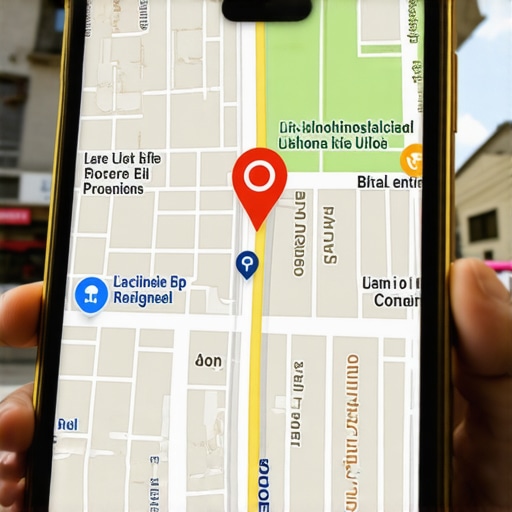
A proximity based ranking drop occurs when Google loses confidence in your physical location or when the distance weighted signal of your centroid is eclipsed by a competitor with stronger local justification. This mathematical shift happens because the algorithm prioritizes the user mobile device location over traditional organic authority. You must verify your latitude and longitude precision within the Google Business Profile dashboard and cross reference it with your JSON-LD LocalBusiness schema. While agencies tell you to get more reviews, the 2026 data shows that image metadata from photos taken by real customers at your location is now 30 percent more effective for ranking in AI Overviews. The camera does not lie. When a customer uploads a photo, the embedded GPS coordinates provide an undeniable proof of presence that a text review cannot replicate. If you want to see how deep this goes, you should look at how we recovered a profile from a proximity-based visibility crash to understand the math of the map.
“Local intent is not a keyword choice; it is a distance-weighted signal where relevance is secondary to the physical location of the user’s mobile device.” – Map Search Fundamental
The pin moved. Data died. I have seen businesses vanish because they moved across the street. The algorithm is a dispatcher. It wants to send the user to the closest, most reliable point of service. When you change your address, you reset the trust clock. This is why why moving your business address often kills local authority almost instantly. You are no longer the known entity at that specific coordinate. You are a stranger in a new neighborhood. The street photographer sees the storefront as it is. Google sees it as a set of numbers. If those numbers don’t match your historical footprint, the Map Pack will filter you out to protect the user experience. You must audit your NAP consistency across the entire ecosystem to stop this bleed.
Why your physical address is a liability
Physical address liability refers to the risk of suspension or ranking drops caused by sharing office space, using virtual offices, or having mismatched location data in the secondary verification tier. Google uses computer vision to analyze Street View imagery and signage to ensure a business is legitimate. If your suite number is missing or if you are located in a coworking space without a dedicated entrance, the algorithm may flag you as a spam risk. To fix this, you need to provide a video verification that shows your permanent signage and professional equipment. Many businesses fail because they ignore the ghost office problem removing old addresses to fix local trust which keeps their old coordinates active in the cache. This creates a data conflict that confuses the Map Pack logic. You cannot rank in two places at once. You must kill the ghost to save the living profile.
The logistics of the local layer are brutal. I remember a contractor who lost 80 percent of his leads because his service area polygon overlapped with a competitor who had a physical office inside that zone. The physical office will almost always win the proximity battle against a service area business (SAB) if the signals are otherwise equal. This is the centroid collapse. If you are an SAB, you must prove your geographic relevance through local posts and geotagged images. Check out the simple signal check for stalled service area rankings to see if your boundaries are actually working for you or against you. You must be precise. Vague service areas are a magnet for manual reviews.
Local Authority Reading List
The three mile radius that determines your revenue
The three mile radius is the primary visibility zone where your Google Business Profile maintains high rank based on the Vicinity update which tightened proximity filters for competitive niches. Beyond this radius, your ranking probability drops significantly unless you have overwhelming brand authority or niche category specificity. You must use local search grid tools to visualize where your Map Pack presence ends. If your visibility stops at a major highway or a city border, you are likely hitting a geographic filter. You can expand this reach by improving your on-page local SEO and ensuring your primary category is the most specific option available. Often, the correct way to change your primary GMB category without losing traffic involves deep competitor research to find under-served niche categories that trigger the 3-pack.
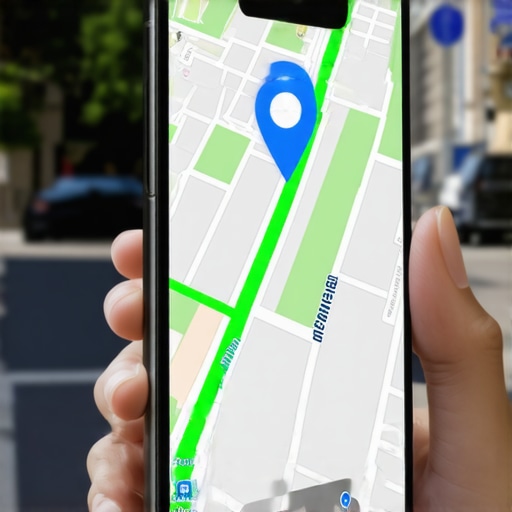
Proximity is not just distance. It is time. Google knows how long it takes to drive to your location. If traffic patterns change or new construction occurs, the Map Pack might adjust who it shows based on estimated travel time. This is the behavioral zooming of the algorithm. It is watching how users interact with the map. If people search for you but never click the directions button, Google assumes your location is either hard to find or irrelevant. You must encourage driving direction requests. This is a massive local ranking signal. We analyzed this in our guide on how to increase google calls without increasing your ad spend by focusing on user intent signals rather than just keywords. Every click on that map is a data point in your favor.
Forensic audit of the local signal
A forensic local audit involves identifying technical crawl errors, schema mismatches, and citation conflicts that prevent Google from verifying your business entity and location. You must examine your Google Search Console for local indexing errors and verify that your LocalBusiness schema contains the exact same NAP data as your GMB profile. Even a small difference like Street versus St. can trigger a trust drop in high-competition markets. You should also check for toxic backlinks that might be associated with your map pin. If your profile was handled by a cheap agency, they might have used cheap local seo services usually result in profile suspensions because they rely on automated citation blasts to low-quality directories. These spam signals linger in the knowledge graph like a bad smell.
“Local justification triggers, such as ‘Their website mentions…’ or ‘Reviewers say…’, are now the primary way Google bridges the gap between proximity and relevance.” – Spatial Search Weekly
The street photographer notices the details. I see the duplicate listings that you missed. If you have two profiles for the same location, you are competing with yourself. Google will filter both of them out to avoid a bad user experience. You must merge or delete these duplicates immediately. We have a toolkit for this. Refer to eliminating duplicate office listings that confuse the algorithm to clean up your digital footprint. Once the data is clean, the ranking recovery can begin. But you cannot build on a foundation of data rot. You must scrub the citations until they are perfect.
Emergency steps for a sudden ranking crash
An emergency ranking recovery plan requires an immediate audit of recent profile changes, a review of Google Business Profile status for hidden suspensions, and a scan for negative SEO attacks or fake reviews. If you vanished overnight, check your primary category and business name for unauthorized edits. Competitors often use the Suggest an edit feature to mark your business as closed or moved. If you find fake reviews, you must initiate gmb spam fighting and review cleanup services to report the profiles to Google’s spam team. This is a manual process that requires a forensic audit of the reviewer profiles to prove a pattern of VPN usage or bot activity. You can find more on this in our guide to how to handle a gmb suspension without losing your customer reviews during a crisis.
Documentation is your only weapon in a hard suspension. You need your business license, your lease agreement, and photos of your utility bills ready. Google is not a person. It is a series of verification loops. If you fail one loop, you are out. I have helped businesses recover by simply changing the aspect ratio of their storefront photos so the AI could read the sign better. It sounds insane, but the algorithm sees what the street photographer sees. If the sign is obscured by a tree in the Street View car’s photo, you are in trouble. You must provide clear, high-resolution evidence of your physical existence. Use the specific steps for fast google business profile recovery to organize your appeal. Do not guess. Follow the protocol.
The toolkit for reclaiming the Map Pack
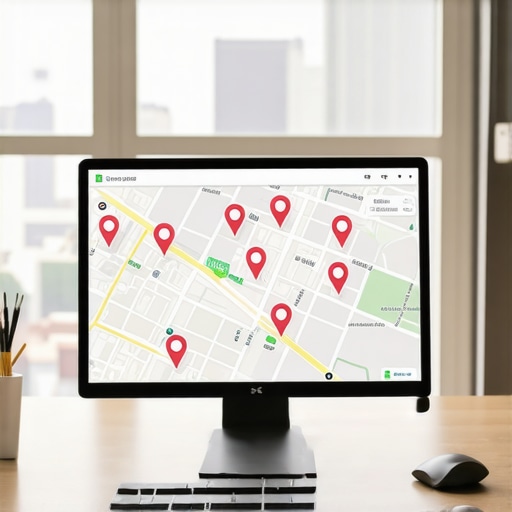
The essential local SEO toolkit must include real time map rank tracking, citation auditing software, and schema validation tools to monitor your proximity health and competitor moves. You cannot manage what you do not measure. You need to see your rankings on a geographic grid, not as a single number. A single number is a lie. Your rank is different at the coffee shop than it is at the park two blocks away. Use the software we trust for real-time map rank tracking to get the microscopic data you need. If you are seeing a ranking stall, it might be time to audit your local links. Over-optimization is a common killer. If your anchor text is 100 percent keywords, you are asking for a manual action. Look at the anchor text audit reducing keyword density to save your rankings for a safer strategy.
The recovery is a grind. It is not a one-click fix. You have to be the nosy neighbor of your own data. Who is linking to you? Why is that old address still showing up on YellowPages? Why is your phone number different on your Facebook page? These are the unseen citation errors that kill your trust score. Every piece of NAP data must be a perfect match. If you are tired of overpaying for SEO services that don’t deliver, check out stop overpaying essential tools for effective local business seo to take control of your own map presence. The map is a living organism. It changes every day. You either adapt to the proximity math or you become a ghost in the GPS coordinates. Stay sharp. Watch the lens. The data never lies if you know how to read it.