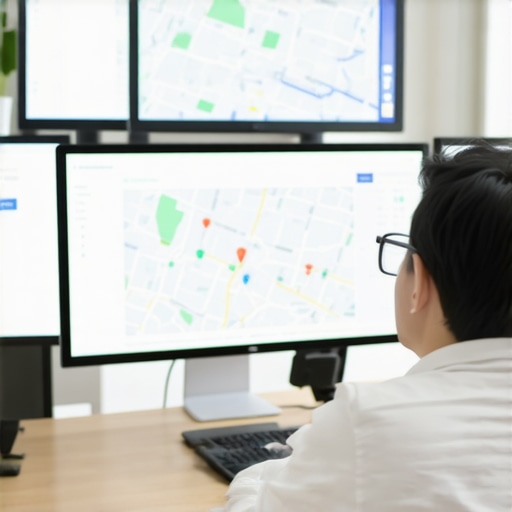
How to Steal Map Traffic From Established Competitors
How to Steal Map Traffic From Established Competitors: The 2026 Blueprint
In the current digital landscape, the battle for local dominance isn’t fought on the global stage; it’s fought in the three-inch “Map Pack” on a smartphone screen. Data from Ahrefs confirms a staggering reality: 46% of all Google searches have local intent, and 90% of consumers rely on Google Maps to find local services. If you are stuck at position #4 or #5, you aren’t just losing visibility – you are actively handing your revenue to competitors who might have inferior services but superior digital signals.
Most “established” competitors are resting on their laurels. They’ve held the top spot for years, relying on age and old review counts to maintain their position. But the algorithm has shifted. In 2026, Google’s AI-driven proximity and relevance filters prioritize “Signal Loops” and “Category Domination” over legacy data. As an expert Local SEO Strategist, I’ve seen how smaller, more agile businesses can rank higher on google maps by exploiting the complacency of the local giants. This guide is your roadmap to dismantling their lead and siphoning their traffic.
The “Signal Audit”: Identifying Why Your Competitors Are Winning
You cannot defeat an opponent you haven’t properly scouted. Most business owners look at a competitor’s 500 reviews and assume they are untouchable. This is a mistake. To steal their traffic, we must analyze their “Signal Strength.” According to Whitespark’s 2026 Local Search Ranking Factors study, the primary category remains the #1 ranking factor. If your competitor is outranking you, it’s likely because their category selection is more aligned with Google’s current intent map than yours.
A manual audit is insufficient. You need to look under the hood to see their secondary categories – the hidden signals that Google uses to broaden their reach. Often, a dominant competitor will use 5-7 secondary categories that capture “neighboring” search intent, allowing them to appear for a wider variety of keywords. To uncover these, we recommend using a technical google business profile seo tool. This allows you to see exactly which categories are driving their visibility and where their profile is thin.
Your audit must also look at “Entity Association.” Does Google view your competitor as a “Lawyer” or as a “Personal Injury Specialist in [City Name]”? The distinction is vital. If their website content is outdated while yours is hyper-focused on local entities, you have an immediate opening. Before you change a single setting, perform The 10-Minute Signal Audit That Reveals Why Your Google Map Presence Stalled to identify the specific gaps in your current profile compared to the market leader.
Category Domination: The #1 Lever for Map Pack Ranking
If you want to rank higher on google maps, you must master Category Domination. Many businesses make the mistake of choosing a category that is too broad or, conversely, too niche. For example, if you run a high-end Italian spot, setting your primary category as “Restaurant” is a death sentence. You are competing with every McDonald’s and Deli in the city. Setting it to “Italian Restaurant” is better, but the real “insider” move is identifying the category with the highest “Conversion Intent” for your specific sub-niche.
Google’s AI now looks for “Category Clusters.” If your primary category is “Plumber,” but your secondary categories don’t include “Drainage Service” or “Heating Contractor,” you are missing out on 30-40% of the total available map traffic. We advise our clients to select 2-3 highly relevant secondary categories. Do not spam this section; adding “Pizza Delivery” to a “Law Firm” profile will trigger a suspension. However, adding “Trial Attorney” to a “Personal Injury Lawyer” profile creates a stronger topical authority signal.
Beyond selection, you must complete every single attribute available in your dashboard. Are you “Black-owned”? Do you offer “Wheelchair accessible seating”? Is there “On-site Wi-Fi”? These aren’t just for customers; they are data points for Google’s Knowledge Graph. An incomplete profile signals a lack of management. By filling out every field, including your opening date and specific service areas, you demonstrate a level of “Profile Health” that many established businesses ignore. This completeness is a core component of any professional google maps ranking service strategy.
Review Velocity vs. Review Volume: The Quality Shift
The biggest myth in Local SEO is that the business with the most reviews wins. In 2026, “Review Velocity” (the speed at which you gain new reviews) and “Review Quality” (the content within them) far outweigh total volume. A competitor with 1,000 reviews from 2021 is incredibly vulnerable to a business with 100 reviews gained consistently over the last six months.
Google’s algorithm now filters for “Natural Growth.” If you get a burst of 20 reviews in one day and then nothing for a month, you trigger a spam flag. To rank google business profile higher than the incumbents, you need a steady cadence of 2-3 high-quality reviews per week. Furthermore, the text within the review is now a primary indexing signal. A review that says “Great service!” is nearly worthless. A review that says, “The best emergency plumber in North Dallas helped me with my burst pipe at 2 AM” is gold. It contains the keyword, the location, and the service – all verified by a third-party user.
You must actively coach your customers to include these details. When you send a review request, ask them specifically what service you performed and which neighborhood they are in. This creates a “Keyword-Rich Review Loop” that tells Google you are the most relevant result for those specific terms. Be careful, however; over-optimized reviews can backfire. You should read our breakdown on Why Generic 5-Star Reviews Are Quietly Killing Your Local Reach to understand how to balance SEO benefits with consumer trust. To track how these reviews impact your visibility, using local seo tools is the only way to see real-time ranking shifts based on review sentiment.
Hyperlocal On-Page SEO: Your Website is the Secret Weapon
Your Google Business Profile does not exist in a vacuum. It is tethered to your website. If your GBP says you are an expert in “Commercial Roofing” but your website only mentions “Roofing,” you have a signal mismatch. To steal map traffic, your website must reinforce every claim made on your profile with surgical precision.
First, ensure your NAP (Name, Address, Phone Number) is 100% consistent. If your GBP says “123 Main Street, Suite 200,” your website footer should not say “123 Main St. #200.” Google’s bots are sophisticated, but they prefer absolute certainty. Minor discrepancies create “frictional distrust” in the algorithm. Secondly, you need dedicated hyperlocal service pages. Instead of one “Services” page, create pages for `/emergency-plumber-dallas`, `/water-heater-repair-dallas`, and `/leak-detection-dallas`.
Each of these pages must contain `LocalBusiness` Schema markup. This code tells Google exactly where you are located, your hours, and your geo-coordinates. Most established competitors are using outdated themes with broken or missing Schema. By implementing clean, JSON-LD Schema, you provide the “Signal Clarity” that allows you to rank higher on google maps even if your domain is younger. Remember, off-site signals matter too, but you must Stop Buying Generic Links: Why Niche Citations Are the Only Listings That Move the Needle. Focus on local directories, neighborhood blogs, and city-specific chambers of commerce to build local relevance.
Breaking the Proximity Loop: Expanding Your Ranking Radius
The “Proximity Filter” is the hardest barrier to overcome in Local SEO. Google naturally wants to show the business closest to the user. This is why you might rank #1 when standing in your office, but drop to #10 just three miles away. Established competitors often dominate their immediate 2-mile radius but fail to capture the surrounding suburbs. This is where you can “steal” their outskirts traffic.
To break the proximity loop, you need to build “Signal Clusters” for neighboring areas. This involves creating location-specific content that isn’t just a “doorway page.” You need to mention local landmarks, cross-streets, and community events. For example, if you are a dentist in downtown Austin but want to rank in Westlake, your Westlake page should mention Westlake High School or the local Eanes school district. This creates a “Geographic Association” in Google’s Knowledge Graph.
Furthermore, you should use local seo software to visualize your “ranking heat map.” If you see your rankings dropping off in a specific direction, that is where you need to focus your citation building and geo-tagged image uploads. By uploading photos to your GBP that were taken in those target suburbs (and ensuring the EXIF data reflects the location), you provide “Proof of Service” in that area. For a deeper dive into these advanced tactics, check out our guide on How to Break the 2026 Proximity Loop for Map Pack Growth.
Defensive SEO: Protecting Your Listing From Malicious Edits
As you begin to climb the rankings and displace the “old guard,” expect them to fight back. In the aggressive world of local search, “Suggest an Edit” is often used as a weapon. Competitors or low-tier SEO agencies may try to change your phone number, mark your business as “Permanently Closed,” or move your map pin to a middle-of-the-road location to ruin your proximity signals.
You must be proactive. Check your GBP dashboard daily for “Google Updates.” If you see changes you didn’t authorize, reject them immediately. More importantly, you need to monitor the “Spam” in your niche. If a competitor is ranking #1 because they stuffed their business name with keywords (e.g., “Best Dallas Plumber – Fast & Cheap Plumbing Repair”), you should report them. Google’s guidelines are clear: the business name must reflect the real-world name. Reporting these “Local Spammers” is not just being petty; it is a legitimate strategy to clear the path for your own growth. We’ve outlined the best ways to handle this in 6 Map Pack Growth Fixes to Outrank Local Spammers in 2026.
A robust google maps ranking booster strategy includes a defensive layer. By using automated monitoring tools, you can get alerts the moment your profile data is tampered with, allowing you to fix it before it impacts your call volume.
Conclusion & The Path to #1
Dominating the Map Pack in 2026 is not a “set it and forget it” task. It is a continuous “Signal Growth System.” Established competitors are vulnerable because they rely on the tactics of 2018. By performing a rigorous signal audit, dominating your categories, maintaining a high review velocity, and optimizing your website for hyperlocal relevance, you can systematically dismantle their lead.
The goal is to provide Google with more “Proof of Relevance” and “Proof of Quality” than anyone else in your zip code. If you are ready to stop being an “also-ran” and start capturing the 90% of consumers using Google Maps, the time to act is now. Perform a 10-minute audit today, identify your competitor’s weakest signals, and use a professional google maps ranking service to automate and accelerate your ascent to the top of the Map Pack. The traffic is there – you just have to go take it.