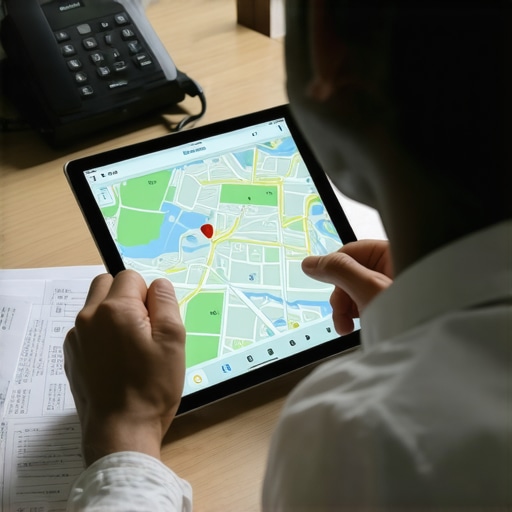
The Real Reason Your Map Impressions Aren’t Turning Into Phone Calls
The Real Reason Your Map Impressions Aren’t Turning Into Phone Calls
You log into your Google Business Profile dashboard and see a number that makes you smile: 5,000 impressions this month. Your google business profile seo efforts seem to be paying off. But then you look at your call logs, and the silence is deafening. There is a massive disconnect between visibility and lead generation that leaves many business owners scratching their heads. As a Local SEO Consultant, I see this daily. The truth is that “Views” are a vanity metric; “Intent” and “Conversion” are the performance metrics that actually pay the bills.
High visibility is the foundation, but it is not the finish line. If you want to get more calls from google maps, you have to stop treating your profile like a billboard and start treating it like a high-converting landing page. In this guide, we will dissect the “Conversion Gap” and explore why your ranking success isn’t translating into revenue.
The Impression Paradox: Why Visibility is Only Half the Battle
The “Impression Paradox” occurs when a business successfully manages to increase google business profile visibility but fails to secure the click or the call. To understand why this happens, we must distinguish between “Discovery” and “Branded” searches. Discovery searches are where the real growth happens – this is when someone searches for “emergency plumber” and finds you. Branded searches are when they search for your business name directly.
Research consistently shows that Google My Business views indicate exposure, not necessarily performance. You might be appearing in the “People Also Search For” section or showing up on the map for a user who is just browsing the neighborhood without any immediate intent to buy. If your google business profile seo strategy focuses solely on being seen rather than being chosen, you are essentially shouting into a void. True performance begins when users feel confident enough to contact you, moving from a passive viewer to an active lead.
Problem 1: The Intent Gap (Ranking for the Wrong Keywords)
One of the most common reasons for high impressions but low calls is that you are ranking for the wrong keywords. You might have successfully managed to rank google business profile for broad, informational terms. For example, a roofing company might get thousands of impressions for “how to spot a roof leak.” While the visibility is high, the intent is low. The user wants information, not a contractor.
Compare that to “roof leak repair near me.” This is a transactional keyword. If you are appearing for informational queries but missing out on transactional ones, your phone will stay silent despite your high view count. This is often a symptom of a profile that lacks specific service-level optimization. If you find yourself in this position, you might be wondering Why Your Business Stays Stuck at #4 and How to Finally Break the Top 3, as the top 3 spots are usually reserved for those who perfectly match the user’s transactional intent.
To fix the intent gap, you must align your “Services” and “Products” sections with the specific pain points of your customers. Don’t just list “Plumbing”; list “Burst Pipe Repair” or “Clogged Drain Emergency Service.” This shifts your profile from being a general resource to a specific solution.
Problem 2: The “Trust Signal” Vacuum
Even if you rank higher on google maps, a user will skip over you in a heartbeat if your profile lacks trust signals. In the local map pack, users make a split-second decision based on three things: your star rating, your review count, and your photos. If any of these are missing or look unprofessional, you have a trust signal vacuum.
Consider the impact of visual content. Industry data suggests that profiles with high-quality, relevant photos can lead to 10x more customer calls than those without. Users want to see the face of the business, the quality of the work, and the reality of the service they are buying. Furthermore, generic 5-star reviews without descriptive text are “quietly killing your local reach.” Google’s algorithm and human users alike value detailed reviews that mention specific services and locations. This is a core component of google business profile optimization.
Technical friction also plays a role. If your NAP (Name, Address, Phone) data is inconsistent across the web, or if your phone number isn’t easily clickable on mobile, you are creating hurdles for the customer. Using high-quality google business profile optimization tools can help identify these friction points before they cost you another lead.
Problem 3: The Ghost Town Profile (Activity & Engagement)
A static profile is a dead profile. If your last post was from 2022 and you haven’t uploaded a photo in six months, consumers assume you are either out of business or simply don’t care. This lack of activity is a major deterrent for local map pack seo success. Google rewards active profiles because activity signals relevance and reliability.
Engagement is the “secret sauce” of conversion. This includes responding to reviews (both positive and negative) within 24 hours and answering questions in the Q&A section. Many businesses completely ignore the Q&A section, leaving it to be answered by random “Local Guides” who may provide incorrect information. By taking control of these interactions, you move the needle from “view” to “call.” For more on this, check out our deep dive on Turning Impressions Into Customers: The Engagement Move Most Local Businesses Completely Miss.
Regularly updating your “Google Business Profile posts” with offers, updates, and behind-the-scenes content keeps your profile looking “alive.” When a user sees a post from three days ago, it builds the confidence necessary to hit the “Call” button.
Benchmarking Success: What Does a “Good” Conversion Rate Look Like?
To understand if your profile is underperforming, you need to know the benchmarks for 2024-2026. Conversion rates (CTR and Call Actions) vary significantly by industry. For example, an HVAC company in the middle of a heatwave might see a Call-to-Impression ratio of 5-10%, while a personal injury lawyer might see 1-2% due to the longer consideration phase of the client.
Top performers in every niche use data-driven google business profile ranking signals to stay ahead. They don’t just look at the total number of calls; they look at the “Call Quality.” Are these calls coming from your target service area? Are they for the services you actually want to provide? If you are getting calls for “cheap lawn mower repair” but you only do “commercial landscaping,” your ranking strategy is misaligned. You can learn How to Track the Real Dollar Value of Your Local Map Leads Without Guessing to ensure your SEO efforts are actually profitable.
If your conversion rate is below 2% for high-intent searches, it is time to stop focusing on how to improve google maps ranking and start focusing on the elements of your profile that influence human psychology.
The 5-Step Framework to Turn Views into Leads
If you are ready to stop chasing vanity metrics and start generating real revenue, follow this 5-step framework to bridge the conversion gap. Using professional local seo tools can streamline this process significantly.
- 1. Audit Keywords for Transactional Intent: Review the “Performance” tab in your GBP dashboard. Look at the queries people used to find you. If they are mostly informational, update your “Services” and “Description” to include “near me” and “emergency” style keywords.
- 2. Update High-Quality, Geo-Tagged Photos Weekly: Don’t just upload stock photos. Upload real photos of your team, your trucks, and your completed projects. Geo-tagging these photos helps reinforce your proximity relevance to Google.
- 3. Implement a “Review Velocity” Strategy: Don’t just wait for reviews; ask for them. Specifically, ask customers to mention the service they received. A review that says “Best emergency plumber in Chicago” is worth ten reviews that just say “Great job.”
- 4. Use a Google Business Profile Audit Tool: Technical gaps like broken website links, incorrect categories, or missing attributes can tank your conversion. Use a google business profile audit tool to ensure your technical foundation is rock solid.
- 5. Optimize the “Services” and “Products” Sections: Treat these like a menu. Use clear pricing (if applicable) and compelling descriptions that highlight your Unique Selling Proposition (USP). For a quick win, follow the 4 Profile Tweaks That Turn Map Views Into Customer Calls.
By following this framework, you ensure that every impression has the maximum possible chance of becoming a phone call. If you’re still seeing issues, it might be time for a 10-Minute Troubleshooting Checklist for Stalled Business Profiles to find the hidden “conversion killers” in your account.
Conclusion: Moving Beyond Vanity Metrics
Ranking #1 on Google Maps is a significant achievement, but it is ultimately useless if your profile doesn’t convert. As Kevin Pauls often notes, “Local SEO isn’t just marketing; it’s infrastructure.” If your infrastructure is built to attract views but not to handle the psychological needs of a customer – trust, relevance, and ease of contact – you will always struggle with a low ROI.
Stop chasing views and start chasing calls. Audit your intent, bolster your trust signals, and stay active. If you need professional assistance in refining your reach and ensuring your visibility turns into actual business growth, consider using a professional google maps ranking service to handle the heavy lifting. For more advanced strategies on staying ahead of the curve, read our latest guide on 7 Google Business Profile Tips to Keep Your Ranking Edge in 2026.