The Service Business Guide to Google Business Profile Optimization
The smell of peppermint and old paper usually accompanies my morning ritual of scanning the local map pack for anomalies. I have spent twenty years protecting local merchants from the digital encroachment of national chains that think a glossy website can replace a decades-long presence in a community. I despise address rentals. I have no patience for those keyword-stuffed business names that treat the Google Business Profile as a billboard rather than a Proximity Beacon. My mission is to ensure the local locksmith or the family-owned HVAC shop stays visible when the algorithmic tide shifts. I view a business listing as a spatial coordinate in a massive, shifting database where every check-in signal and every photo upload acts as a pulse of life. If that pulse is faked, I will find the trace. If it is buried, I will dig it out.
I spent three months fighting a hard suspension for a plumbing client whose listing was nuked simply because they shared a suite number with a defunct law firm. Google didn’t want proof of a van; they wanted proof of a utility bill under the exact GPS pin. We had to document the physical transition of the space, showing the move from legal briefs to pipe wrenches. This is the reality of the hyper-local layer. It is gritty, it is forensic, and it is often unfair. If you are struggling with a similar situation, knowing the step-by-step path to overturning a business profile suspension is the only way to keep your doors open in the digital age.
The ghost in the GPS coordinates
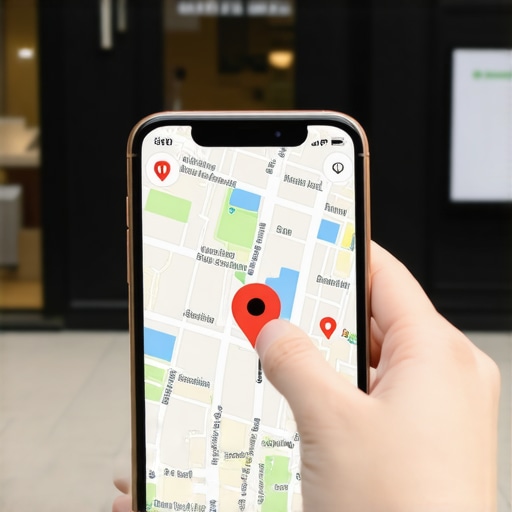
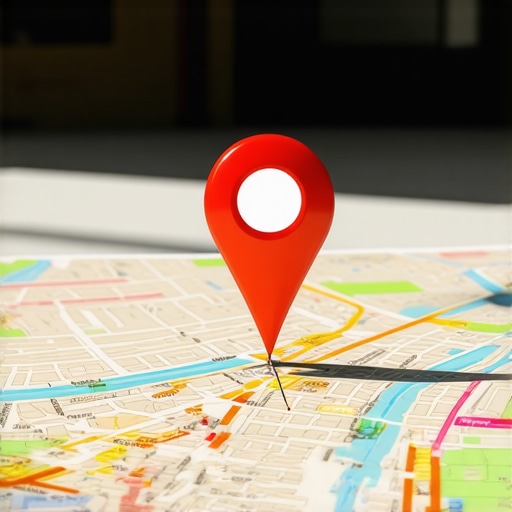
GPS coordinate salience and centroid theory dictate that your business location is a mathematical weight rather than just a street address. Google calculates the relevance of your profile based on the physical distance between the searcher and your verified pin, often ignoring businesses that fall outside a specific proximity radius. The algorithm looks for the most logical answer to a local query, which is frequently the closest one that possesses high trust signals. This is why why your map pin isnt showing up for your own business name can often be traced back to a misalignment in how your latitude and longitude are recorded in the underlying database. The accuracy of this data is the foundation of your entire search presence. If the coordinates are off by even a few hundred feet, you might find yourself filtered out of the very neighborhood you serve.
The precision of a location signal is determined by more than just the address you typed into the dashboard. Google cross-references your coordinates with Point of Sale (POS) data, historical traffic patterns, and even the metadata of images uploaded by your customers. Every time a user takes a photo at your shop, the EXIF data embedded in that file confirms your physical presence to the search engine. This creates a forensic trace that is nearly impossible for spam accounts to replicate. If you are trying to understand the the real impact of schema markup on local map pack visibility, you must realize that schema is just the digital translation of these physical truths. It tells the algorithm exactly where the walls of your business stand in the physical world.
Why your physical address is a liability
Service Area Businesses (SABs) and hybrid profiles must navigate a complex landscape where hiding your address can actually lead to a drastic drop in organic impressions. While Google allows you to hide your specific street location if you do not see customers at your office, doing so often removes the most powerful ranking signal you have, which is the physical proximity trigger. Many business owners find themselves recovering your map spot after a drastic service area change because they expanded their radius too far, causing the algorithm to view their profile as a spam risk. The logic is simple. If you claim to serve a fifty mile radius from a residential kitchen, you are competing with thousands of other signals, and Google will prioritize the brick and mortar shop in the center of the action every time.
“Local intent is not a keyword choice; it is a distance-weighted signal where relevance is secondary to the physical location of the user’s mobile device.” – Map Search Fundamental
The danger of the virtual office trap cannot be overstated. I have seen countless profiles flagged for using coworking spaces without a dedicated, private entrance. Google’s spam team views these as “ghost offices” designed to manipulate the map pack. If you are in this position, you need the virtual office survival checklist for local service brands to ensure you aren’t the next victim of a manual sweep. A real business has a utility bill, a lease, and a permanent sign. Without these, your digital presence is built on sand. The algorithm is increasingly focused on proof of presence, and no amount of backlinking can save a profile that fails the basic smell test of physical existence.
The three mile radius that determines your revenue
Map Pack physics dictate that the vast majority of local conversions happen within a three mile radius of the searcher’s current position. This is the proximity puzzle that frustrates even the most seasoned SEO experts. Even if you have the best toolkit to improve local search rankings, you cannot force the map to show your business to someone twenty miles away if there are competent competitors closer to them. The 2021 Vicinity update doubled down on this logic, making distance the primary ranking factor, often at the expense of review counts or keyword relevance. This shift was designed to stop the dominance of older, established brands that were hogging the map from further away.
To win in this environment, you must focus on Local Justification triggers. These are the small snippets of text that appear in the map pack results, such as “Their website mentions [keyword]” or “A reviewer said [keyword].” These justifications prove to the searcher that you are relevant to their specific need at that specific moment. This is why how to research local keywords that actually drive phone calls is a different science than traditional SEO. You aren’t just looking for volume; you are looking for the terms that trigger these justifications. You want the algorithm to highlight your business as the most logical, nearby solution. If you can’t be the closest, you must be the most justified.
Local Authority Reading List
- A no fluff toolkit for improving your local search results fast
- Why your category choice is the single most important move for map rank
- How to win the proximity game when your competitors are closer to the center
- The ghost office problem removing old addresses to fix local trust
- Scaling your service radius without getting your office flagged for spam
Solving the fake review epidemic
Review sentiment analysis and forensic profile auditing are now mandatory for any business owner who wants to maintain a clean reputation. I have seen cases where a local cafe was nearly ruined because a competitor used a VPN to drop twenty 1-star reviews in a single hour. This is negative SEO in its most visceral form. You must have seo services to fix fake reviews issues before the algorithm decides your business is a high-risk entity. Google’s automated filters are better than they used to be, but they still miss coordinated attacks from sophisticated bot farms. You have to prove the pattern. You have to show that the reviewers have no history in your city and that their accounts were all created on the same day.
The value of a review is no longer just the star rating. Google is looking for long-form descriptions that contain high-intent entities. A review that says “Great service” is worth almost nothing compared to one that says “The plumber fixed my leaking copper pipe in the basement and arrived exactly on time in downtown Austin.” The second review confirms your location, your service category, and your reliability. This is the data that feeds AI Overviews. If you are rebuilding trust signals when your map rankings start to slip, focus on getting your real, loyal customers to write about the specific problems you solved for them. Those specific details are the only armor you have against fake reviews and algorithmic skepticism.
The hidden math of service area polygons
Service Area Polygons define the boundaries of where your business actually operates. When you select your service areas in the GBP dashboard, you are creating a digital fence. If those fences overlap too much with your other locations, you create internal competition that can cause your rankings to stall. Google hates redundancy. If it sees two profiles from the same company serving the exact same zip codes, it will often filter one of them out entirely. This is the hidden trap of overlapping service areas in local search results. You must segment your territories with surgical precision to ensure each profile has its own unique geographic authority.
Expanding your radius is not a shortcut to more leads. In fact, a radius that is too large can dilute your relevance signal. If you tell Google you serve the entire state, but your office is in a small corner of it, the algorithm will struggle to associate you with any specific neighborhood. You are better off dominating a five mile radius than being invisible in a fifty mile one. For those managing multiple offices, why your multi-city business data is confusing the local algorithm is often a question of NAP (Name, Address, Phone) consistency. If your data is messy, the algorithm gets nervous. When the algorithm gets nervous, it hides your pin.
When the map pin vanishes into thin air
Manual actions and algorithmic filters can cause your business to disappear from the map overnight without warning. This usually happens when there is a significant change in your core business data, such as a relocation or a primary category switch. I have watched top-ranking companies vanish because they tried to update their phone number and triggered a re-verification loop. If you are recovering visibility after a category change backfires, you must understand that Google views every major change as a potential fraud attempt. They want to see that the business is still the same entity with the same owners and the same physical location.
The removal of ghost citations is a vital part of the recovery process. If there are old addresses for your business floating around on the web, Google’s crawler will find them and see a conflict. This conflict reduces your trust score. You need to perform a citation audit that actually works to purge these dead directories. It is a slow, manual process that requires contacting webmasters and verifying changes. It is the digital equivalent of cleaning up a neighborhood. It isn’t glamorous, but it is the only way to restore the signals that the map pack requires for a top-three ranking. The algorithm is a judge, and your citations are the witnesses. If the witnesses don’t agree, the judge will throw out the case.
A toolkit for the neighborhood merchant
Hyperlocal tracking tools are the only way to see what is actually happening in the streets. You cannot rely on a single ranking number because your rank changes every time a searcher moves a block to the left or right. You need a grid-based view of your performance to identify the proximity dead zones where your competitors are beating you. Using the the only tools we use to audit google business profiles allows you to see the map as Google sees it. You can see the exact moment your pin starts to fade as the distance from your office increases.
The most dangerous thing you can do is over-optimize your site with keyword-stuffed anchor text. This was a common tactic five years ago, but now it is a fast track to a penalty. If you are the anchor text audit reducing keyword density to save your rankings, you are essentially trying to make your site look human again. The algorithm wants to see natural language and brand-focused links. It wants to see that you are a real part of the community, not just a digital marketer trying to game the system. Stop chasing the algorithm and start serving the searcher. When you provide the best, most localized answer to a query, the rankings will follow. The map is a reflection of reality, and my job is to make sure your reality is loud, clear, and verified.