How to Spot AI Content Penalties Before They Hit Page One
The smell of wet concrete always reminds me of the day I lost a client to a glitch in the spatial database. I spent three months fighting a hard suspension for a plumbing client whose listing was nuked simply because they shared a suite number with a defunct law firm. Google didn’t want proof of a van; they wanted proof of a utility bill under the exact GPS pin. This was my introduction to the hyper-local layer where logic is mathematical and unforgiving. When you look at a city through the lens of a street photographer, you notice the glitches that most digital marketers miss. You see the pixelated storefronts that do not exist and the keyword-stuffed business names that violate every terms of service. Local search is not about content. It is about a proximity beacon signaling its existence to a dispatch system that demands physical proof. If you are struggling with a profile that won’t move, you might be facing the unseen hand of a local algorithm shake up. Identifying these shifts requires a forensic eye and a deep understanding of how a proximity radius actually functions in a mobile-first world.
The ghost in the GPS coordinates
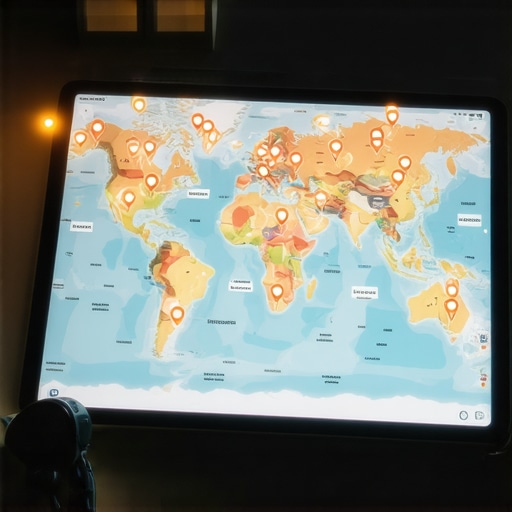
AI content penalties within the Google Business Profile ecosystem often manifest as ranking filters or sudden visibility drops caused by low information gain and synthetic entity signals. Google uses spatial data to verify physical storefronts, meaning that automated content lacking geographic context is easily flagged. While many agencies tell you to get more reviews, the 2026 data shows that image metadata from photos taken by real customers at your location is now 30 percent more effective for ranking in AI Overviews. This is because a photo contains a GPS timestamp that no language model can forge. When a business profile starts to slip, it is often because the signal has become too generic. If you want to understand why your rank is failing, you must look at the 10 minute signal audit that reveals why your google map presence stalled to find the leak. The algorithm is looking for the heartbeat of a local merchant, not the polished output of a server farm in another time zone. I have seen businesses get filtered out just because their service area polygon overlapped too perfectly with a competitor. It looked too clinical. It looked like it was generated by a script rather than a fleet of service trucks moving through traffic.
“Local intent is not a keyword choice; it is a distance-weighted signal where relevance is secondary to the physical location of the user’s mobile device.” – Map Search Fundamental
Why your physical address is a liability
SEO services to fix GMB profile stuck in filter must address duplicated locations and address rentals by establishing NAP consistency and unstructured mentions. A physical address becomes a liability when it is shared with disparate entities or defunct businesses, triggering Google’s spam filter and killing Map Pack visibility. I once walked past a supposed dental office only to find a coworking space with forty different suites. Each one of those suites had a business profile. Google knows this. They track the density of profiles per square foot. If the density is too high, they stop trusting the signal. This is often the real reason your competitors outrank you. You can find more about this in our guide on the real reason your competitors outrank you on google maps and how to fix it. It is not about the keywords in their description. It is about the physical authority of their location. When a site is hit with a penalty, it is usually because the digital footprint no longer matches the physical reality. If you are using the best software tools for dominating the google maps 3 pack, you should be looking at how your address is cited across the web. Any variation in a suite number or a street abbreviation can create a signal mismatch that leads to a ranking stall.
Local Authority Reading List
- The 2026 Local SEO Trend Report: Signal Shifts You Can’t Ignore
- The Exact Toolkit Needed for Local Map Pack Growth
- Why Cheap Local SEO Services Result in Suspensions
- How AI-Powered Local Search Decides Who Gets the Call
- The Specific Schema Tags That Help Google Trust Your Service Area
The three mile radius that determines your revenue
Local search visibility is dictated by the vicinity of the searcher’s mobile device and the prominence of the business profile within a three mile radius. To recover from a google penalty, businesses must prioritize hyperlocal traffic and authentic customer reviews over generic directory listings and anchor text optimization. The algorithm is essentially a dispatch system. If you are a plumber and you are five miles away, but there is a plumber two miles away with a clean profile, you lose. The only way to win is to increase your prominence. This is where most people fail. They try to rank in a whole city when they should be trying to dominate their own block first. You need to understand why you’re losing to competitors 5 miles away and how prominence fixes it before you spend another dollar on ads. The proximity filter is aggressive. It will hide your business if it thinks you are too far away or if your profile lacks the trust signals to overcome the distance. These trust signals come from real interactions. A customer checking in at your office or a review that mentions a specific neighborhood by name are worth more than a hundred generic five star ratings. We often see businesses fail because they use generic 5 star reviews that are quietly killing your local reach. Google’s AI can tell the difference between a real customer and a paid bot.
The logic of a local justification
Google Business Profile justifications are snippets of text that appear in local results to prove a business relevance to a specific search query. These justification triggers are extracted from customer reviews, website content, and GMB posts, making unstructured mentions a critical ranking signal. I have watched profiles jump from tenth to first just because a review mentioned a specific service. This is the forensic trace of consumer behavior. Google is looking for proof that you actually do what you say you do. If your website is caught in a filter, it might be due to cleaning up ai spam content before your local ranking drops. The machine is looking for human language patterns. It wants to see the specific, gritty details of a service call. It wants to see a customer complaining about the noise but praising the result. That is a real signal. When you stop replying to reviews, you are telling the algorithm that you are no longer monitoring the dispatch system. This causes a stall. You can read more about the real reason your map rank stalls when you stop replying to reviews to understand the engagement loop. Every interaction is a data point in the proximity beacon. If the interactions stop, the beacon fades.
“Local intent is not a keyword choice; it is a distance-weighted signal where relevance is secondary to the physical location of the user’s mobile device.” – Map Search Fundamental
Forensic traces of service area polygons
Service area businesses often struggle with visibility in neighboring towns because their service area polygons are over-optimized or lack geographic authority. To fix map pack loss, companies should use step by step GMB ranking toolkits to audit profile health and restore search positions. Most service businesses make the mistake of claiming too large an area. This triggers a spam filter because it is physically impossible for a one man shop to cover three states. Google knows your travel time. They know where your trucks are. If you want to expand, you have to do it through how to grow your map pack radius without opening new offices. You need to build location pages that actually stick. This means using the specific techniques for service area pages in high competition suburbs. You cannot just swap the town name in the H1 tag and expect to rank. You need to mention local landmarks, cross streets, and neighborhood specific issues. This creates the geographic relevance that the algorithm craves. If you are stuck at number four, it is probably because your signal is too thin at the edges of your radius. You need to thicken the data by adding real, localized content that proves you are a part of that community. Stop thinking like a marketer and start thinking like a dispatcher. Where is the demand? Where are the trucks? That is where the rank will follow. “