How to build location pages that capture traffic from neighboring zip codes
How to Build Location Pages That Capture Traffic from Neighboring Zip Codes
In the current landscape of google business profile seo, many local business owners find themselves hitting what I call the “Proximity Loop.” You rank exceptionally well within a two-mile radius of your physical office, but as soon as a potential customer searches from a neighboring zip code just five miles away, your business vanishes from the Map Pack. This invisible wall is the primary barrier to scaling a local service business in 2026.
As a Google Business Profile Product Expert, I’ve seen the evolution of local search firsthand. Google’s 2026 algorithm has doubled down on a core philosophy: “Relevance + Proximity.” While you cannot easily change your physical proximity, you can hyper-optimize your relevance. Location pages are the strategic bridge that connects your physical office to the high-value neighboring zip codes where your customers live and work. To dominate these areas, you need a sophisticated local seo strategy that goes beyond generic city pages.
Why Standard “City Pages” Are Failing in 2026
For years, the standard advice was to build a page for every major city in your metropolitan area. You’ve seen them: “Plumber in Dallas,” “Plumber in Fort Worth,” “Plumber in Arlington.” In 2026, these broad city pages are losing their effectiveness. We are witnessing a phenomenon known as “Search Radius Shrinkage.”
Google’s AI-driven search results now prioritize hyperlocal signals over broad municipal boundaries. Users no longer search for “Plumber in Los Angeles”; they search for “Plumber in Silver Lake” or “Plumber 90026.” If your landing page only mentions the city at large, you are missing the micro-signals that Google requires to verify you actually serve a specific neighborhood. This is precisely Why Service Area Businesses Fail to Show Up in Neighboring Towns. Without specific neighborhood names, zip codes, and local landmarks, your page is just another drop in a sea of generic content that Google’s helpful content classifier will likely ignore.
The Hyperlocal Framework: Researching Neighboring Zip Codes
Before you start writing, you need data. You cannot guess which zip codes will be profitable. A successful expansion starts with a “gap analysis” of your current reach. You need to identify where your google business profile seo is strong and where it drops off a cliff.
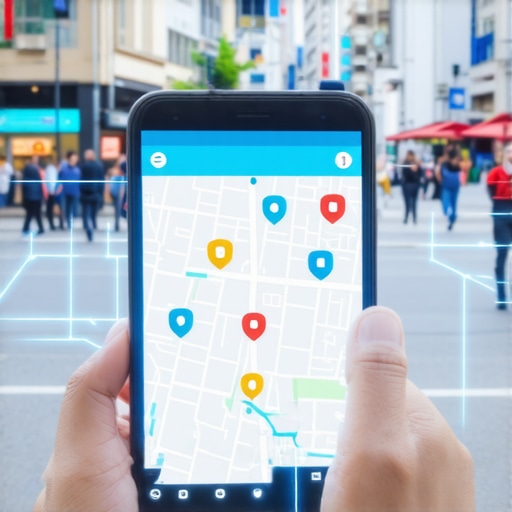
- Identify High-Intent Zip Codes: Use a professional google maps rank tracker to visualize your current “heat map.” Look for zip codes that are adjacent to your ranking zones but currently show you in positions 4-10. These are your “low-hanging fruit.”
- Analyze Competitor Density: Some zip codes are over-saturated with legacy businesses. Look for “underserved” neighborhoods where the Map Pack is filled with businesses that have poor reviews or incomplete profiles. These are the areas where a high-quality location page can move the needle fastest.
- Keyword Research at the Neighborhood Level: Don’t just target the zip code. Use 4 Neighborhood Keyword Tactics That Pull Traffic From Neighboring Zip Codes to identify how locals actually refer to their area. Is it “The Heights”? “Midtown”? “The West End”?
Data shows that including 2-3 primary zip codes in the Title Tags and H1s of your location pages significantly increases click-through rates (CTR) for localized queries. When a user sees their exact zip code in the search results, the relevance signal is undeniable. To effectively rank google business profile listings across these gaps, your research must be the foundation of every page you build.
Content Anatomy of a High-Ranking Location Page
A location page is not just a contact form with a different heading. To rank in 2026, each page must provide genuine utility to the user in that specific zip code. If you are looking to rank higher on google maps, your location pages must include the following elements:
Hyperlocal Copy and Context
Your copy should mention local landmarks, major intersections, parks, and even popular local businesses (non-competitors). For example, instead of saying “We serve the Houston area,” say “We frequently provide HVAC repairs near Memorial Park and the Washington Avenue Corridor in the 77007 and 77008 zip codes.” This creates a “Geographic Relevance Web” that Google’s crawlers use to associate your business with that specific spot on the map.
Localized Visuals
Stock photos are the death of local SEO. You need real photos of your team working in that specific zip code. If you are a roofer, show a finished project in a recognizable neighborhood. Metadata in these images (alt text and file names) should reflect the neighborhood and zip code. Using local seo tools like SEO Viper can help you audit these signals to ensure they are firing correctly.
NAP Consistency and Local Reviews
Your Name, Address, and Phone number must be clearly displayed. Even if you are a service area business (SAB) without a physical office in that zip code, you must clearly state your service boundaries. One of the most powerful conversion and ranking factors is embedding reviews from customers who actually live in that zip code. Seeing a neighbor’s testimonial builds immediate trust and signals to Google that you have a physical presence in the area through your service history.
For those managing multiple locations, it is vital to How to Build Service Area Pages That Actually Stick in High-Competition Suburbs by ensuring that no two pages are carbon copies of each other. Duplicate content is the fastest way to get your location pages filtered out of search results.
Technical SEO: Schema and Map Embeds
The “under the hood” elements of your location page are what tell Google’s AI exactly where you operate. In 2026, structured data is no longer optional; it is the primary language of search.
The most important technical element is the LocalBusiness schema combined with the areaServed property. By defining your service area in JSON-LD using specific zip codes or GeoShape coordinates, you provide a clear roadmap for Google’s Search Generative Experience (SGE). This is the key to proving your relevance to a specific neighborhood. I detail this further in my guide on The Specific Schema Tags That Help Google Trust Your Service Area.
Additionally, use the “Map Embed Technique.” Don’t just embed a generic map of your office. Embed a custom Google Map that highlights the specific service boundary of the zip code you are targeting. This creates a direct API link between your website and Google Maps, reinforcing your local map pack seo efforts. When Google sees a map of Zip Code 90210 embedded on a page optimized for 90210, the topical and geographic relevance is solidified.
Implementing these technical markers is part of a comprehensive service area business seo plan. If you find this level of technical implementation daunting, using a professional google maps ranking service or google maps ranking service can help automate the deployment of these complex schema structures.
Scaling Without Getting Flagged
A common fear among business owners is that building 10, 20, or 50 location pages will look “spammy” and lead to a Google Business Profile suspension. This is a valid concern if you are using low-quality, AI-generated “doorway pages.” However, scaling is safe if you focus on unique value.
To scale correctly, follow the How to Scale Maps to 10 New Suburbs Fast (2026 Framework). The secret is “Incremental Uniqueness.” Every page should have:
- Unique project descriptions from that specific suburb.
- Specific local driving directions (e.g., “Take I-10 West and exit at Bunker Hill”).
- Links to local community resources or neighborhood associations.
- A unique H1 and meta description that targets the specific neighborhood + primary service.
When you provide this level of detail, you aren’t building a doorway page; you are building a valuable local resource. This approach is the cornerstone of google business profile optimization. It allows you to expand your digital footprint without the overhead of opening new physical offices. By using local business seo tools, you can monitor the performance of these pages and see which zip codes are responding best to your content.
Conclusion & Action Plan
Building location pages that capture traffic from neighboring zip codes is the single most effective way to “break” the proximity filter in 2026. By shifting your focus from broad cities to hyperlocal zip codes and neighborhoods, you align your business with how modern consumers actually search.
The ROI of this strategy is clear: higher Map Pack visibility, increased CTR from local residents, and a more resilient google business profile seo strategy that doesn’t rely solely on your office’s front door. Start by auditing your current reach with a google maps rank tracker. Identify three neighboring zip codes where you have some existing traction and build out hyper-targeted pages using the framework provided today.
For business owners and agencies looking to accelerate this process, leveraging local seo automation tools or a dedicated google business profile seo platform is the next logical step. The local search landscape is shrinking, but for those who master the art of the location page, the opportunity for growth has never been larger.