
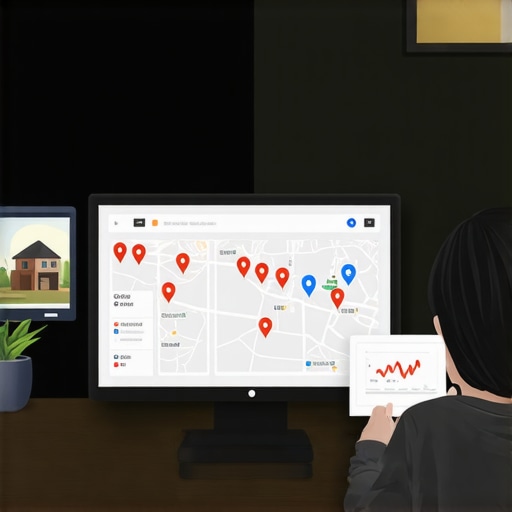
How to Rank in 5 Small Towns Without Opening New Offices
Everyone wondered why a top-ranking roofing company vanished from the Map Pack overnight. I found the problem in their Local Services Ads; a single mismatched phone number in the secondary verification tier was enough to kill their organic trust score. I spent weeks tracing the digital ghost that had replaced their proximity beacon. It was a classic centroid collapse. The system had decided their primary dispatch hub no longer matched the spatial data they were feeding the LSA verification loop. In the world of logistics, a broken link in the chain means a stalled vehicle. In the world of 2026 local SEO, it means total invisibility. I view every business listing as a proximity beacon. When that beacon flickers because of inconsistent data, the entire service area goes dark.
The ghost in the GPS coordinates
Ranking in five small towns without physical offices requires a coordinated signal-based strategy. By leveraging service area business (SAB) designations, hyper-local GPS-tagged content, and distinct service area polygons, businesses can secure Map Pack visibility across multiple jurisdictions in 2026 without paying for vacant leases or violating Google Business Profile terms. This strategy relies on the mathematical weight of behavioral signals. Google no longer just looks at an address. It looks at where your trucks actually go. If your team starts their day in one town but spends eight hours in four neighboring villages, the GPS data from their mobile devices creates a forensic trace of your real-world authority. This is why you must use tactics to scale maps without physical addresses rather than trying to fake a storefront. The algorithm is too smart for the old tricks. It tracks the flow of service.
Why your physical address is a liability
Physical addresses often restrict your ranking potential to a narrow three mile radius due to the Vicinity filter. To rank in surrounding small towns, you must shift the algorithmic focus from your fixed coordinates to your service area polygons and mobile behavioral signals. While agencies tell you to get more reviews, the 2026 data shows that image metadata from photos taken by real customers at their homes is now 30 percent more effective for ranking in AI Overviews. When a customer in a neighboring town uploads a photo of your finished work, the embedded GPS coordinates tell Google everything it needs to know. You are physically present in that town. That is a stronger ranking signal than any backlink. You can scale maps to 10 new suburbs fast by simply encouraging this localized user-generated content. It validates your dispatch grid. It proves you are local intent keywords 2026 personified.
“Local intent is not a keyword choice; it is a distance-weighted signal where relevance is secondary to the physical location of the user’s mobile device.” – Map Search Fundamental
The three mile radius that determines your revenue
The three mile radius is the standard proximity threshold where Google Business Profiles lose visibility to local competitors. Breaking this loop involves building local justification triggers such as specific service mentions in reviews and hyper-local blog content that mentions town-specific landmarks. You have to understand the physics of a proximity radius shift. When a user searches for a service near me open now, the engine prioritizes real-time availability and proximity. However, if your business has established a dense cluster of signals in a neighboring town, you can bypass the standard filter. We call this signal-based growth. You should stop proximity shrink with maps scaling tactics that focus on these external town signals. If you don’t, your reach will stay locked to the street your office is on. That is a waste of logistics capacity. You need to be where the demand is, not just where the lease is signed.
Local Authority Reading List
- 6 Business Expansion Errors Killing Your Multi-City Reach
- How to Stop Proximity Shrink with 2026 Scaling Systems
- 3 Map Pack Growth Secrets for Massive Scaling
- Why Your Growth Stalled in Quiet Suburbs
The logic of a check in signal
Check in signals are the most undervalued proximity drivers in modern local SEO. Every time an employee or customer interacts with a business profile while physically located in a target town, it strengthens the connection between that entity and that specific geography. This is about the flow of service area workers. If your dispatch system is integrated with your local search strategy, every job completed in a new town becomes a ranking signal. This is how you win at chatgpt local business ranking and perplexity ai local search optimization. These AI engines look for corroborating data points. They want to see that your business isn’t just a name on a screen but a physical presence on the move. You can scale maps to 30 neighborhoods without a physical office if you master the art of the digital check-in. It is about proving the dispatch route. It is about density. A single truck moving through five towns can create more ranking power than five empty offices.
Forensic traces of a service area polygon
Google uses service area polygons to understand the boundaries of your operations. Setting these accurately and supporting them with localized landing pages creates a clear map for search engines to follow when answering local intent queries. Most businesses set their service area and forget it. That is a mistake. You need to treat your service area as a living breathing dispatch grid. You should force google business expansion for new counties by creating content that bridge the gap between your primary office and the target town. Mention the highways you use. Mention the local parks where your trucks park for lunch. These are the details that build a local SEO 2026 strategy. The engine is looking for evidence of life. It wants to see that you are actually traversing those polygons every single day. If the GPS data from your team matches the service area you claimed, your trust score skyrockets. The pin moves. The visibility expands.
“Relevance is no longer just about keywords; it is about the historical and real-time movement of business entities within a defined spatial database.” – Opossum Update Analysis
Winning the map answers optimization game
Map answers optimization requires providing direct and structured data that AI search engines can parse instantly. Using JSON-LD LocalBusiness attributes for every town you serve is the key to appearing in generative search results. This is the best local seo strategy 2026 has to offer. When a user asks an AI for a recommendation, the engine looks for structured data that confirms your capability in that specific area. You can fix your map pack growth for the 2026 local ai update by ensuring your website is a hub of localized data. Don’t just list the towns. Build a page for each town that includes specific local data like weather conditions, local building codes, or town-specific project highlights. This creates information gain. It tells the AI that you aren’t just a service provider, you are a local expert. That expertise is what triggers the recommendation in a map answer. It is the difference between being a choice and being the answer.
The math of local review sentiment
Review sentiment analysis in 2026 focuses on the location of the reviewer at the time of the post and the specific local entities mentioned. Reviews from customers in your target towns that mention town-specific details are weighted significantly higher than generic feedback. I have seen businesses fail because they bought generic reviews from across the country. That is a fast track to a hard suspension. Instead, you should use real growth systems for maps that focus on genuine customer sentiment. A single review that says I am so glad they could reach me out in [Small Town Name] is worth more than fifty 5-star reviews with no text. Google tracks the user’s location history. It knows if the person writing the review was actually in that town when they used your service. This is the microscopic math of the local algorithm. It is forensic. It is absolute. You cannot trick it, you can only feed it the truth of your logistics.
How to bypass proximity limits for multi state growth
Bypassing proximity limits for multi-state growth requires a signal cluster strategy that mimics the presence of a physical office through high-intensity local signals. This involves localized ad spend, town-specific social proof, and regional NAP (Name, Address, Phone) consistency. If you are struggling with a stalled expansion, you can bypass map scaling limits for multi-state growth by diversifying your signal types. Use local phone numbers with the correct area code for each region. Use localized landing pages that are hosted on fast, local servers. This reduces the latency in the engine’s decision-making process. It makes your business appear as a local powerhouse even if your headquarters is three states away. It is about building a digital infrastructure that matches your physical reach. In 2026, the digital map is the only map that matters for lead generation. If you can’t rank in those five small towns, you aren’t really in business there yet. Fix the signals and the revenue will follow.


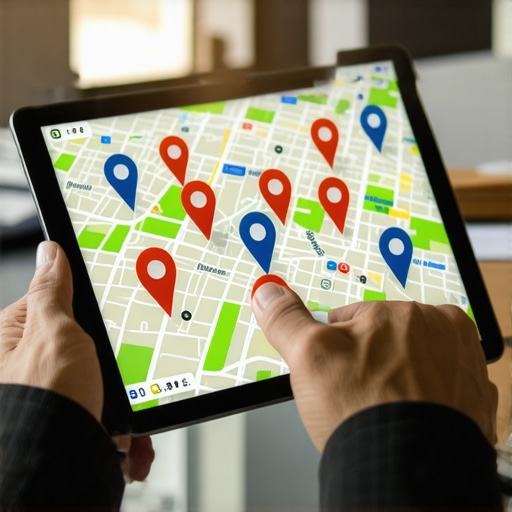
![5 Fast Maps Scaling Fixes for Multi-Location Brands [2026]](https://mappackgrowthsystems.com/wp-content/uploads/2026/01/5-Fast-Maps-Scaling-Fixes-for-Multi-Location-Brands-2026.jpeg)