I remember staring at my screen late one night, frustration creeping in as my latest local business expansion attempt flatlined. It hit me—no matter how many citations or reviews I piled up, the map pack just wouldn’t budge. That was my lightbulb moment. I realized that traditional strategies no longer cut it in 2026; the game had changed, and if I wanted to succeed, I needed a new playbook grounded in smart geo-fencing.
Why Geo-Fencing Matters More Than Ever in 2026
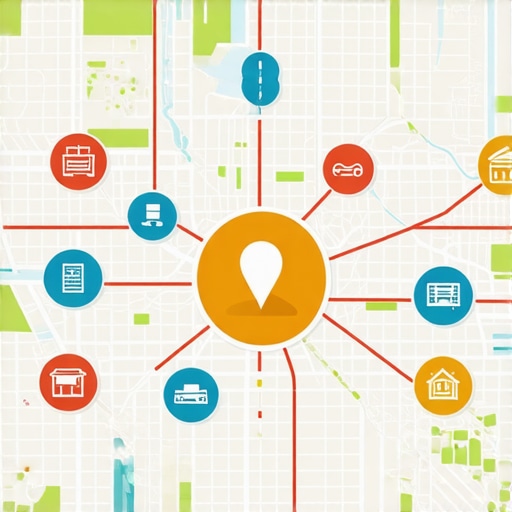
In the rapidly evolving landscape of local SEO, geo-fencing has emerged as a critical tool. Think of it as setting invisible boundaries that guide Google and your potential customers right to your doorstep—virtually, of course. According to a recent report by BrightLocal, 78% of mobile local searches lead to offline purchases, underscoring how vital precise geolocation tactics are for visibility and conversions today.
If your business hasn’t yet harnessed the power of geo-fencing, you’re likely missing out on a treasure trove of targeted traffic. The challenge, however, is knowing which tactics will actually work without risking penalties or wasted resources. The good news is, over years of trial and error—and some hard lessons learned—I’ve cracked a few essential geo-fencing strategies that are proven to accelerate Map Pack growth in 2026.
Is Geo-Fencing the Silver Bullet or Just Hype?
One mistake I made early on was treating geo-fencing as a set-it-and-forget-it solution. I threw up a few fences and hoped for the best. Spoiler: it doesn’t work like that. Effective geo-fencing requires finesse, continuous adjustments, and understanding Google’s complex algorithms. If you’ve faced similar struggles—like your map rankings plateauing despite all efforts—you’re not alone. I’ve been there, and that’s why I’m eager to share the tactics that helped me turn things around.
Start by conducting a detailed geo-data audit of your target areas. Use tools like [hyper-local geo-scraping](https://mappackgrowthsystems.com/3-geo-data-hacks-to-reclaim-your-2026-map-pack-rankings) to identify gaps in your current coverage and to detect any discrepancies in location signals. I once used a combination of GPS data logs and local reference points to map out underserved neighborhoods, which uncovered opportunities I hadn’t considered. This approach helps you understand where your signals are weak and prepares the groundwork for effective geo-fencing.
Next, implement micro-adjustments to your geo-fences—think of it as tuning a radio to get crystal-clear reception. Use geo-signal tweaks to optimize your fence radius and signal strength. I tested different fence radii—ranging from 300 meters to 1 kilometer—and found that smaller, tighter fences gave higher relevance and reduced wasted impressions. Adjust these parameters regularly based on performance data and local activity patterns.
Leverage Multiple Location Signals
Combine various signals—like Wi-Fi proximity, Bluetooth beacons, and IP geolocation—to reinforce your geo-fences. When I scaled a local home services client across several districts, integrating multiple signals helped bypass some of the proximity limitations imposed by Google’s filters in 2026. Think of it as creating a network of unseen anchors that strengthen your virtual boundary, making your presence more consistent and harder to ignore by the algorithm.
Implement Doorway or Virtual Locations Effectively
For service areas without physical addresses, setting up virtual or While many believe that simply increasing citations or reviews guarantees map pack success, the real nuance lies in understanding the **complex interplay of signals** that Google evaluates. One prevalent misconception is that scaling multiple locations automatically boosts visibility; however, without proper systems in place, this can lead to rankings drop or account suspensions. A deeper mistake is attempting to emulate generic strategies from other niches, ignoring the unique demands of local service businesses. Instead, leveraging tailored growth systems like those discussed in our cornerstone guide can prevent costly errors and ensure sustainable expansion. For instance, many overlook how critical accurate geo-data audits are—think of it as the foundation of your entire growth architecture. If your signals are misaligned, your entire effort becomes a game of whack-a-mole, chasing rankings instead of building a solid presence.
Advanced growth isn’t about random tactics but about **precision, consistency, and understanding Google’s evolving algorithm**. For example, many fail to adapt their virtual location tactics to newer proximity filtering mechanisms introduced in 2026. Smart solutions, combined with robust signal reinforcement, can help penetrate these barriers. Remember, it’s not just about more maps or locations; it’s about **smart scaling that considers proximity, signal integrity, and proper indexing**. You can explore proven systems for scaling your Google Business profiles effectively at [fix your scaling with these systems](https://mappackgrowthsystems.com/fix-your-scaling-3-growth-systems-for-google-business-in-2026).
Beware of falling into the trap of over-optimization, which can trigger spam filters and cause penalties. Google’s algorithm has become increasingly sophisticated, weighing user signals and contextual relevance heavily. Consistently monitoring your data, adjusting geofence parameters, and avoiding manipulative shortcuts are vital steps—more details can be found in our comprehensive explainer on [Map Pack Growth Systems](https://mappackgrowthsystems.com/4-map-pack-growth-systems-for-rapid-multi-city-scaling-in-2026).
**What specific advanced mistake do many local SEOs overlook when trying to momentum their growth?** One critical error is neglecting to implement layered signal reinforcement, which ensures your virtual fences are recognized even amidst Google’s proximity filters. External industry experts, like those cited in Search Engine Land, emphasize that integrated multi-signal approaches significantly improve local rankings ([source](https://searchengineland.com)).
Have you ever fallen into this trap? Let me know in the comments.Achieving initial success with local SEO tactics is only half the battle; maintaining and scaling that growth over time requires the right tools and strategic systems. One of my go-to solutions is using Google Business Profile Manager, which allows me to monitor rankings across multiple locations efficiently and identify fluctuations early. I personally rely on [BrightLocal’s rank tracker](https://brightlocal.com/tools/rank-tracker/) because it provides granular, localized ranking data and keyword insights, helping me optimize campaigns dynamically. Additionally, incorporating local citation management tools like Moz Local ensures consistent NAP data across platforms, which is crucial for preserving your map pack presence. For ongoing keyword and competitor analysis, SEMrush offers robust features tailored for local scaling, enabling me to spot emerging opportunities or threats at a glance. Looking ahead, I predict that integrating AI-powered data analysis will become essential, allowing marketers to predict fluctuations and proactively adapt strategies. To sustain long-term results, I recommend establishing a regular audit routine combining these tools—perform weekly checks, adjust geo-fencing parameters, and keep your signals tightly integrated. How do I maintain map pack visibility over time? The answer lies in continuous optimization and leveraging the right systems—like [scaling maps for multiple locations without ranking drops](https://mappackgrowthsystems.com/scale-maps-for-20-locations-without-a-ranking-drop-2026)—to ensure your expansion efforts remain resilient against proximity filters and algorithm updates. Don’t hesitate to try applying advanced geo-data audits combined with local citation health checks to lock in your rankings. Remember, consistent monitoring with these tools can make the difference between stagnation and sustained growth.
Lessons the Hard Way: My Most Impactful Realizations
One of the toughest lessons I learned was that relying solely on traditional verification tactics can backfire. Persistent updates from Google mean that strategies effective last year might now trigger filters, risking penalties. It’s essential to stay agile and adapt our geolocation signals constantly, much like tuning a finely calibrated instrument. I also discovered that scaling without layered signal reinforcement—such as combining Wi-Fi, Bluetooth, and IP geolocation—leads to inconsistent rankings, especially in dense markets. The critical insight was recognizing that many growth systems overlook the importance of fine-tuning fences based on local activity patterns, which can make or break Map Pack visibility in competitive areas. These lessons pushed me to refine my approach, focusing on precision and ongoing optimization rather than static tactics.
My Essential Toolkit for Map Pack Mastery
Over the years, I’ve come to trust certain tools that keep my local SEO efforts razor-sharp. BrightLocal’s rank tracker provides granular, localized insights that help me spot fluctuations early, preventing costly ranking drops. For managing citations and ensuring NAP consistency, I rely on Moz Local—it’s reliable and streamlines multi-location updates seamlessly. When experimenting with geo-parameter adjustments, geo-signal tweaking guides from authoritative sources have been invaluable. Lastly, scaling frameworks that focus on layered signals and virtual locations have transformed my approach from reactive to proactive, ensuring consistent growth across markets.
Stay Bold: Your Next Step Has Power
The future of local SEO and map pack growth lies in persistent innovation and strategic scaling. Now is the time to refine your geo-fencing, embrace layered signals, and leverage advanced tools to outmaneuver proximity filters. Your efforts today set the foundation for dominant visibility tomorrow—don’t let fear of complexity hold you back. Dive into proven growth systems, continuously monitor your signals, and push your boundaries beyond conventional limits. Remember, sustainable growth in the 2026 landscape isn’t about quick wins but about mastering a system designed for longevity and resilience. Ready to take your local expansion to the next level? Take action today, and start building the map presence that leads your industry.