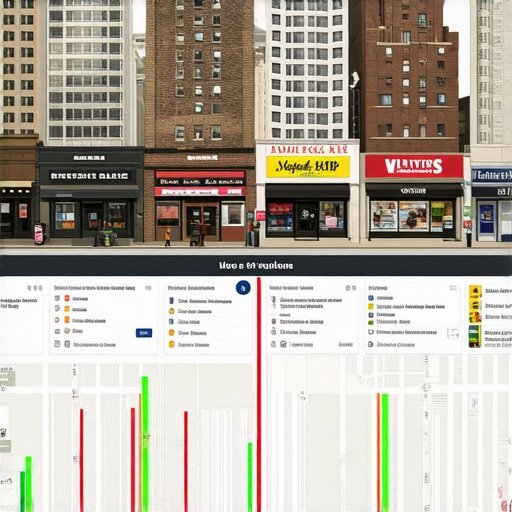
Last year, I remember staring at my data dashboard, frustration bubbling up. My local map rankings plateaued unexpectedly, despite pouring effort into my Google Business profile. It felt like hitting an invisible wall that I couldn’t see or break through. Then, the lightbulb went off — maybe I was missing crucial pieces of the puzzle. That moment was a wake-up call, and I realized many others might be in the same boat. Today, I want to share my personal journey and reveal the top three reasons I found that could be silently stalling your Google Business expansion in 2026. These insights are based on real experience and plenty of trial and error. If you’ve noticed your growth slowing, you’re not alone — and there’s hope.
Why Your Map Pack Growth Could Be Flatlining — And What to Do About It
The landscape of local SEO, especially with Google’s ever-evolving algorithms, is like navigating a maze. One moment, your rankings are climbing; the next, they’re dead in the water without any apparent reason. I used to think that just optimizing my Google Business profile was enough. Spoiler alert: I was wrong. I overlooked critical factors that silently sabotage your progress.
Early on, I mistakenly believed that adding more reviews would skyrocket my rankings. While reviews matter, focusing solely on them without addressing other technical and strategic elements was a costly mistake. According to Moz’s study, citations, reviews, and on-page signals are all crucial — but so is understanding how Google perceives your entire online footprint. Missing these can create blind spots and leave your expansion rate in limbo.
What I’ve learned through experience, and what I want to share with you, is that getting stuck typically stems from a handful of overlooked yet fixable issues. Over the next sections, I’ll guide you through actionable strategies to get your local growth accelerating again. But first, let’s tackle the most common skepticism I hear from folks just like you.
Prioritize Accurate and Consistent Data
Ensuring your business information is precise and uniform across all digital platforms is foundational. I remember a time when I updated my NAP (Name, Address, Phone number) on my website but overlooked local directories. It caused a mismatch, and I saw my rankings stall. To correct this, use tools like BrightLocal or Moz Local to audit all your listings and fix inconsistencies. Maintaining consistency helps Google perceive your business as trustworthy, boosting your local pack visibility.
Leverage Localized Content That Resonates
Create content tailored to your community’s interests, events, or landmarks. I tested a blog post celebrating a local festival—adding location keywords naturally—which increased engagement. Use ‘hyper-local’ keywords in your website pages and Google My Business posts to signal relevance. Remember, Google favors pages that demonstrate genuine local relevance, so showcasing community involvement can move the needle.
Build Highly Relevant Local Citations
Citations are mentions of your business elsewhere on the web. Start by claiming your profiles on key platforms like Yelp, TripAdvisor, and industry-specific directories. I once added my business to multiple niche directories following the guidelines here: Data-Backed Scaling Systems. Focus on quality over quantity—ensure each citation includes accurate details, matching your GMB profile exactly. This enhances credibility and can propel your local rankings upward.
Engage with Local Communities Actively
Participate in local forums, sponsor events, or host workshops. I sponsored a local charity run, then shared the event across my channels. Engagement signals activity and authority to Google. Also, actively respond to reviews on your Google Business profile—thank positive reviews and address negative ones promptly. These interactions humanize your brand and reinforce your local relevance.
Implement Strategic Review Acquisition
While reviews aren’t the only factor, they remain influential. Initiate a review campaign by politely requesting satisfied customers to leave feedback, perhaps via follow-up emails or SMS. I used a simple script, which eventually doubled my number of reviews within a month. Check out Systems for Maps Without Reviews for alternative strategies if reviews are slow to come. Remember, authentic reviews build social proof and influence Google’s local algorithms.
Optimize Your Google My Business Profile Effectively
Fill out every section comprehensively—business categories, attributes, service menus, and Q&A. I once neglected the ‘Services’ section, which caused my profile to appear less relevant. Utilizing scaling systems can help streamline this process. Regular updates, high-quality photos, and relevant posts keep your profile active, signaling to Google that your listing is the go-to option in your area.
Monitor Results and Adapt Quickly
Track key metrics like search impressions, clicks, and call volume using tools like Google Search Console and GMB insights. I implemented weekly reviews of my data, which allowed me to identify dips early and pivot strategies accordingly. For comprehensive methods, see Proven Strategies to Boost Local Visibility. Staying responsive ensures your efforts remain focused and effective, preventing stagnation in your local map rankings.
Many local marketers believe that a straightforward, tactical approach—like optimizing reviews or citations—is enough to rocket their map pack rankings. However, this mindset can be misleading. In my experience, most people overlook a critical nuance: the *interdependence of foundational systems and strategic execution*. Relying solely on isolated tactics without understanding how these pieces integrate often results in stagnation or even regression. For instance, repeatedly updating your Google Business profile without simultaneously auditing your overall online footprint can cause conflicting signals, confusing Google’s algorithms. A survey by Moz highlights that holistic consistency across citations, reviews, local content, and technical signals significantly influences rankings, yet many ignore this interconnectedness.
Let’s explore a common trap that many fall into: equating frequency of activity with effectiveness. You might be posting daily on your GMB, but if your keyword targeting, review acquisition, and backlink strategies are misaligned, those efforts won’t move the needle. It’s like trying to build a house on shaky foundations; all the effort is wasted. A true growth system demands a strategic blueprint that considers all elements in sync, rather than rushing to implement the latest hack.
Now, here is a question for advanced practitioners: How do you measure the synergy between local signals to ensure your multi-location setup is truly scalable without causing ranking conflicts? According to expert analyses, such as those discussed by Whitespark, tracking the correlation between citation consistency, review velocity, and onsite content provides deeper insight into your map pack’s health. Over-reliance on surface-level metrics might cause you to overlook underlying systemic issues that prevent scaling effectively.
Avoiding this trap involves adopting a comprehensive growth mindset. Instead of viewing tactics as isolated efforts, integrate all local SEO elements into a cohesive system that amplifies each other. For example, combining content marketing with strategic citation management and review campaigns creates a multiplying effect—something I detail in my cornerstone guide on local SEO expansion. If you want to accelerate your growth, dive into the systematic approaches found here: data-backed scaling systems.
Remember, quick fixes may yield temporary results, but sustainable growth comes from mastering the nuanced interplay of your local signals. Have you ever fallen into this trap? Let me know in the comments. Keep refining, stay strategic, and you’ll unlock the true potential of your local presence.Once you’ve dialed in your local SEO strategy and start seeing consistent results, the real challenge begins: keeping everything working smoothly over time. In my experience, leveraging the right tools and establishing robust processes are essential for sustaining growth in your Google Business expansion efforts. One of the first tools I swear by is BrightLocal, which provides ongoing citation audits and reputation management. It helps me quickly identify and correct inconsistent NAP data across multiple directories, preventing ranking fluctuations caused by outdated or conflicting information. Additionally, local keyword tracking tools like Whitespark’s Local Rank Tracker offer invaluable insights into how your business performs in specific neighborhoods, enabling proactive adjustments before rankings slip. For technical monitoring, Google’s Search Console remains invaluable—keeping an eye on crawl errors and indexing issues ensures your site remains optimized for local queries.
Long-term success also hinges on instituting internal routines. I recommend monthly audits of your local listings, reviews, and on-site content to catch any inconsistencies early. Automating review requests with tools like Podium streamlines incoming feedback, maintaining a healthy review velocity and social proof. I also suggest setting up Google Alerts for your business name and primary keywords; this helps catch any unintentional misrepresentations or negative mentions that could impact local trust.
Predicting where local SEO is headed, the trend toward automation and AI-driven insights is clear. Incorporating advanced tools that leverage machine learning will become even more critical for managing multi-location growth efficiently. For example, tools capable of analyzing review sentiment or detecting local citation inconsistencies automatically can save countless hours and prevent minor issues from escalating.
### How do I ensure my local growth efforts stay effective over time?
Creating a systematic approach—combining authoritative tools like BrightLocal and Whitespark with regular manual checks—forms the backbone of sustained success. My recommendation is to establish a quarterly review cycle, adjusting strategies based on performance data and emerging algorithm trends. For insights into scaling your maps systematically, consider exploring strategies outlined in this comprehensive guide on scaling maps across numerous locations. Remember, the key to long-term growth isn’t just initial results—it’s about building a resilient system that adapts to changes and withstands the test of time. Don’t overlook the importance of these maintenance routines—they’re the foundation that keeps your map pack rankings solid and profitable for years to come.
Lessons the Hard Way: My Biggest Growth System Realizations
One of the most impactful lessons I learned was that the map pack isn’t just about isolated tactics but about creating a symphony of signals working harmoniously. Jumping from one shiny new hack to another often distracts from the core systems that truly move the needle, like consistent local citations and genuine community engagement. I also discovered that over-optimizing certain areas can trigger false positives or even penalties if not balanced with real-world relevance. Finally, the importance of patience and iteration became clear—building a reliable local presence is a marathon, not a sprint, and my best results came when I embraced long-term systematic improvements over quick wins.
Tools and Resources That Changed My Approach
My indispensable toolkit includes BrightLocal, which helps me audit citation consistency and reputation, ensuring my foundational data is reliable. Whitespark’s Local Rank Tracker keeps my finger on the pulse of neighborhood-specific performance, allowing me to adapt quickly. I also rely heavily on Google Search Console for technical insights and Google My Business insights for direct engagement metrics. For strategic learning, I recommend consulting the proven frameworks in these scalable systems, which distill complex processes into actionable steps and are rooted in real-world testing. These tools and resources collectively keep my local expansion on track and evolving with the landscape.
Champions of Continuous Growth Need to Feel Inspired
Remember, the journey to dominant local visibility isn’t a one-time effort but an ongoing mission. Embrace the challenges as opportunities to sharpen your systems, stay curious about emerging signals, and keep your community connections genuine. Your growth system is your vehicle—fuel it with perseverance, strategy, and a willingness to adapt. The future of locality-focused SEO in 2026 is bright for those ready to refine their approach. Keep pushing, stay strategic, and watch your map pack presence flourish in ways you never thought possible!