The Hidden Trap of Overlapping Service Areas in Local Search Results
The hidden trap of overlapping service areas in local search results
I spent three months fighting a hard suspension for a plumbing client whose listing was nuked simply because they shared a suite number with a defunct law firm. Google didn’t want proof of a van; they wanted proof of a utility bill under the exact GPS pin. This was not just a clerical error. It was a proximity collision. When two businesses share a digital footprint, the algorithm views it as a trust violation. As a logistics manager in the search space, I see this as a dispatch failure. You cannot have two trucks occupying the same physical and digital coordinate without a signal crash. This is the reality of the Map Pack ecosystem in the modern era.
The proximity math of service area polygons
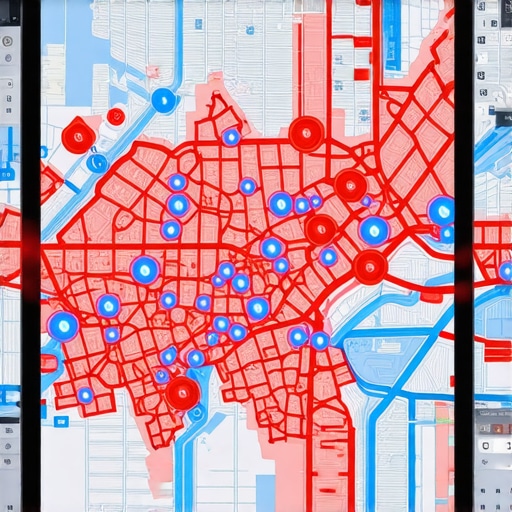
Overlapping service areas occur when multiple Google Business Profiles claim identical geographic territories, causing the algorithm to filter one out to provide diversity in search results. This proximity conflict triggers a ranking suppression where Google chooses the most authoritative profile and hides others within the same service area polygon. This is not about keywords. It is about spatial logic. When your business defines a service area, you are drawing a digital fence. If that fence sits directly on top of a competitor who has more historical data, your pin vanishes. Many owners wonder why your best service areas aren’t seeing your business on the map, and the answer is usually found in the overlap. Google wants to show a variety of providers. It does not want to show three plumbers from the same zip code if their service polygons are identical. You must differentiate your territory or risk being filtered. The math of the centroid is unforgiving. If you are not the primary authority in that specific GPS slice, you are invisible. This is why how to stabilize rankings after changing your service area becomes a survival skill for growing companies.
“Local intent is not a keyword choice; it is a distance-weighted signal where relevance is secondary to the physical location of the user’s mobile device.” – Map Search Fundamental
The ghost in the GPS coordinates
Hidden technical errors in your location data act as ghosts that haunt your ranking potential even if your office is legitimate. These errors include old address data, mismatched suite numbers, and conflicting coordinate signals that confuse the local algorithm and lead to immediate profile suspensions. I have tracked vans that never moved. I have seen profiles that claimed a service area covering three states while the business only had one license. This is a dispatch nightmare. Google sees the forensic trace of your mobile device and compares it to your claimed area. If your employees never actually enter the zones you claim, the trust score drops. You might need emergency seo services for sudden ranking drop when the algorithm realizes your service area is a fiction. This is where the ghost office problem kills your momentum. You are fighting an invisible battle against your own data history. Every time you move or change a service zone, you leave a trail of digital debris. If you do not scrub that data, the algorithm assumes you are a lead-gen spammer. Cleaning this up requires more than just a name change. It requires a total forensic audit of every mention of your business online.
Local Authority Reading List
- Why your business profile stays suspended despite following every rule
- The unseen citation errors that confuse google and kill your map ranking
- Why moving your business address often kills local authority
- How to reclaim a hijacked or suspended business profile
- The specific steps for fast google business profile recovery
Why your physical address is a liability
A business address becomes a liability when it is flagged for being a virtual office, a P.O. box, or a shared workspace that lacks a physical sign and a dedicated entrance. Google uses Street View data and user-contributed photos to verify the physical reality of your storefront. If your address is in a building with fifty other businesses and you do not have a unique suite, the algorithm treats you as a high-risk entity. This is why why your business profile ranking tanked after moving cities is such a common complaint. The move breaks the trust bond between your old coordinates and your current profile. You need a gmb ranking toolkit for small business owners to monitor these shifts in real-time. Proximity is a physical fact. You cannot optimize your way out of a bad location choice. If you are located on the edge of a city, your reach into the center will always be limited by the proximity of competitors located in the downtown centroid. This is why the real reason your business disappears from maps when you leave the office is often tied to your mobile signal. Google knows where you are. If you aren’t at the office, the authority of that pin fluctuates.
The three mile radius that determines your revenue
The three mile radius surrounding your verified business pin is the primary zone where you will achieve maximum search visibility and call volume. Beyond this radius, your prominence must be significantly higher than all other competitors to break into the local Map Pack. Most local businesses fail because they try to rank everywhere instead of dominating their immediate vicinity. I call this the fuel efficiency of search. You should focus on the the simple signal check for stalled service area rankings to see where your authority drops off. It is better to be number one in a two-mile circle than number ten in a twenty-mile circle. The calls happen in the top three. Everything else is just vanity metrics. To push your reach further, you must use the map embed technique that actually signals authority to google. This tells the algorithm that your business is a landmark, not just a temporary listing. When you build location pages, you need to think like a dispatcher. You are mapping out routes and hubs. Each page should serve as a signal for a specific neighborhood, using how to build location pages that capture traffic from neighboring zip codes as your blueprint. This is how you expand without opening a second physical office.
“Local relevance is a binary state. You are either the most logical answer for a user at a specific coordinate, or you are invisible.” – Map Search Fundamental
Fighting the suspension war with forensic evidence
Suspension recovery requires a forensic approach to documentation including utility bills, business licenses, and video evidence of your physical equipment and signage. Google no longer accepts simple photos; they require a continuous video showing your location, your tools, and your team in action. If you get hit with a hard ban, you need how to fix a hard suspension and get your service area business back on maps. It is a grueling process. They want to see the diesel in the tank and the logos on the shirts. They are looking for reasons to delete you. This is why recovering from a hard ban the exact paperwork google needs to see is the most important document in your files. You must prove you exist in the physical world. This is not about SEO. This is about identity verification. If you have been using why keyword stuffing your profile still leads to suspensions, you have already painted a target on your back. The algorithm is looking for patterns of deception. A clean, honest profile with verified data will always outlast a keyword-stuffed one in the long run. I have seen massive companies lose everything because they tried to game the address system. They thought they could rent a desk and call it a headquarters. Google found out. The pin moved. The revenue stopped. This is the risk of poor logistics in local search.