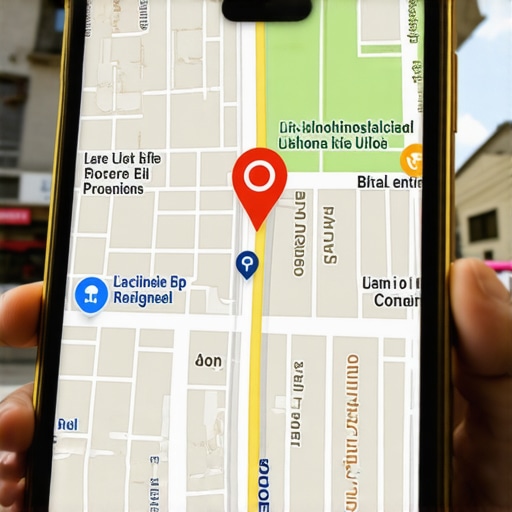
Why Your Map Pin Isn’t Showing Up for Your Own Business Name
The air in the back of that plumbing warehouse smelled like wet concrete and rusted copper. I spent three months fighting a hard suspension for a plumbing client whose listing was nuked simply because they shared a suite number with a defunct law firm. Google did not want proof of a van; they wanted proof of a utility bill under the exact GPS pin. This was not about keywords. This was about the forensic reality of a physical space that the algorithm no longer trusted. When you type your own business name into the search bar and the Map Pack returns a void or a competitor, you are not looking at a search error. You are looking at a failure of proximity salience and entity clarity.
The invisible weight of a shared suite number
Brand confusion happens when Google associates your business identity with a separate or defunct listing at the same physical coordinate. This merging of database entries forces the algorithm to suppress one of the profiles to avoid user confusion. It is a mathematical calculation where the older or more established entity often wins the visibility battle. I have seen this happen frequently with multi-location businesses where the data from a previous tenant still lingers in the local ecosystem. If you are struggling with this, eliminating duplicate office listings is the first step toward reclaiming your name. The algorithm is binary; it requires a one-to-one relationship between a name, an address, and a phone number. When that relationship breaks, your pin disappears.
“Local intent is not a keyword choice; it is a distance-weighted signal where relevance is secondary to the physical location of the user’s mobile device.” – Map Search Fundamental
How merged listings create digital shadows
Merged listings occur when Google’s crawler finds enough overlapping data points to decide two businesses are actually one. This often triggers a brand confusion loop where your reviews, photos, and ranking power are diverted to a profile you do not control. Fixing this requires a deep audit of your Name, Address, and Phone (NAP) data across every tier of the local search ecosystem. Many agencies claim to offer seo services to fix brand confusion from merged gmb listings, but few actually understand the centroid theory at play. You have to prove to the algorithm that the two entities are spatially and legally distinct. This is why the audit process for recovering from manual google bans is so intensive; it is a trial where you are the defendant.
The forensic trace of a service area polygon
A service area polygon is the mathematical boundary you set within your business profile to define where you work. When this polygon overlaps too heavily with a competitor or a previous business at your address, Google’s proximity filter kicks in. This filter is designed to prevent ‘Map Spam’ by only showing the most prominent result in a specific area. I look at maps like a street photographer; I see the glitches and the blurred lines. If your business is set as a service area business (SAB) but your home address is still linked to an old retail profile, the trust score drops. You might need local seo services to fix nap inconsistencies before your pin will show up for your own name again. Consistency is not just a suggestion. It is the fuel for the ranking engine.
Why slow websites kill your map visibility
Technical site speed and core web vitals are now direct ranking signals for the Map Pack. A slow website creates a negative behavioral signal that tells Google your business is not reliable for mobile users. If your site takes more than three seconds to load on a 4G connection, the local algorithm will often demote your map profile. I have worked with clients who had perfect GMB profiles but zero visibility because their site was bloated with unoptimized images. You should look for seo services to fix slow website and technical issues to ensure your foundation is solid. The map pin is simply the tip of the spear; the website is the shaft that gives it weight. If the site is infected or slow, the pin falls.
The mathematical reality of centroid theory
Centroid theory suggests that Google prioritizes the geographic center of a city or a search area for high-intent queries. If your business is located on the periphery, your ‘prominence’ score must be significantly higher than a competitor located in the city center. This is the physics of local search. Most business owners do not understand that why you are losing to competitors 5 miles away is often due to this prominence gap. You cannot move your building, but you can increase your digital weight through unstructured mentions and hyper-local citations. This is where 5 niche citation sources can make a difference. Standard directories are white noise. Local, relevant mentions are the signal.
How to scrub the stain of historic citation spam
Historic citation spam refers to the thousands of low-quality, automated business listings created by ‘budget’ SEO agencies in the early 2010s. These dead directories often contain old addresses or phone numbers that confuse current search algorithms. Cleaning these is a manual, grueling process that requires verifying and deleting old data points. When I investigate a ranking drop, I often find a trail of toxic link removal needs that the owner never knew existed. You need local seo services for cleaning historic citation spam campaigns to restore your profile to a ‘trusted’ state. One wrong phone number on an old yellow pages clone can be enough to keep you out of the 3-pack.
Local Authority Reading List
- The software we trust for real-time map rank tracking
- The 10-minute troubleshooting checklist for stalled business profiles
- Preparing for the 2026 local search shift
- The simple toolkit for improving your local map rankings fast
The three mile radius that determines your revenue
Proximity is the single strongest ranking factor in the modern Google Maps algorithm. For most service industries, your business will only appear for users within a three to five mile radius of your physical location. This radius can shrink or expand based on the density of competitors in your immediate area. If your business is invisible for your own name while you are standing in your office, your profile has likely been filtered. This is often the result of duplicate google business profiles competing for the same space. You must use gmb ranking tools for agencies to see how your visibility ‘heat map’ looks across different zip codes. The pin moved. You need to know where it landed.
Restoring trust signals for local seo prominence
Trust signals are the non-keyword factors that Google uses to verify the legitimacy of a business. These include the length of time your profile has been active, the consistency of your business hours, and the frequency of authentic customer reviews. When these signals are interrupted by a suspension or a hack, the algorithm stops showing your pin. Recovery is not about adding more keywords. It is about services to restore trust signals for local seo. If you have been hit with a manual action, you need how we recovered a site from a google manual action penalty to guide your path. Trust is hard to build but incredibly easy to lose in the map pack ecosystem.
The 2026 shift toward image metadata
Future search algorithms will rely more on the metadata found within user-uploaded photos than on the text within a review. Google can now see the GPS coordinates, the timestamp, and the visual objects within a photo to confirm a transaction actually took place at your location. This is a massive shift toward behavioral verification. Agencies that rely on stock photos will see their clients disappear. To stay ahead, you need the best software to rank in google maps 3 pack that can handle these new data points. The tiny change we made to our profile photos shows how powerful visual data can be. The algorithm is no longer reading; it is seeing. Take photos of your street sign. Take photos of your truck. This is the new proof of life.