Eliminating Duplicate Office Listings That Confuse the Algorithm
Eliminating Duplicate Office Listings That Confuse the Algorithm
I spent three months fighting a hard suspension for a plumbing client whose listing was nuked simply because they shared a suite number with a defunct law firm. Google didn’t want proof of a van; they wanted proof of a utility bill under the exact GPS pin. This was not just a clerical error. It was a spatial collision. As someone who views the local map as a logistics grid, I know that two entities cannot occupy the same coordinate without causing a system failure. The smell of cold espresso and the hum of server racks define my nights spent auditing these data ghosts. When you have duplicate listings, you are not just double-counting; you are dividing your authority by zero. The algorithm sees a messy dispatch log and simply stops sending you traffic.
The ghost in the GPS coordinates
Duplicate listings are unverified echoes of a business identity that fragment the authority of your primary Google Business Profile. When two pins claim the same phone number or a similar address, the algorithm experiences a logic failure. It splits the ranking signals between the two entities. Neither profile gains enough velocity to break into the top three. This is why the unseen citation errors that confuse google are the primary reason for stagnation. You might think having two listings gives you more real estate, but in reality, it creates a filter trigger. Google prefers one high-confidence signal over two low-confidence ones. The math is simple. If you have fifty reviews split across two profiles, you have zero profiles with fifty reviews. You are effectively competing against yourself while your actual competitors move past you on the map. This fragmentation is often caused by historic citation spam campaigns that were never properly cleaned up after a business merger or a simple move across the street.
Why your physical address is a liability
A business address is a spatial anchor that determines your proximity relevance in a three mile radius. If your old office address still exists in a third party directory, it creates a conflict with your current verified location. This is especially true for those who need seo services to fix ranking loss after moving city locations. Google scrapes data from thousands of sources. If the old data is still active on a site like YellowPages or Yelp, the algorithm assumes you have two locations. If you only have one physical office, this is a violation of the terms of service. The logistics of the map require a one to one relationship between a legal entity and a physical pin. When this relationship breaks, the trust score drops. I have seen businesses lose seventy percent of their call volume because an old listing from five years ago resurfaced in a data refresh. You must treat your address history with the same precision a logistics manager treats a shipping manifest. Any error in the coordinates leads to a lost package or, in this case, a lost lead.
“Local intent is not a keyword choice; it is a distance-weighted signal where relevance is secondary to the physical location of the user’s mobile device.” – Map Search Fundamental
Cleaning historic citation spam campaigns
Manual citation auditing and cleanup is the only way to remove the deep-seated data errors that automated tools often miss. While many agencies rely on software to sync data, those tools often lack the forensic capability to find hidden duplicates on niche directories. You need niche citation sources that actually move the needle rather than just adding more noise. The process involves identifying every variation of your name, address, and phone number (NAP) ever used. We then reach out to each directory to merge or delete the records. It is tedious work. It smells like old paper and feels like a long haul flight. But if you do not scrub the history, the algorithm will continue to find these ghosts. These old listings act like anchors on a ship. You can have the best engine in the world, but you will not move until the anchors are lifted. This is why a professional audit strategy for reversing local seo penalties is vital for long term growth.
The local authority reading list
- Identifying the unseen citation errors that kill rankings
- Fixing the subtle nap errors costing you money
- Why ranking tanks after moving cities
- The simple audit that reveals competitor weaknesses
The three mile radius that determines your revenue
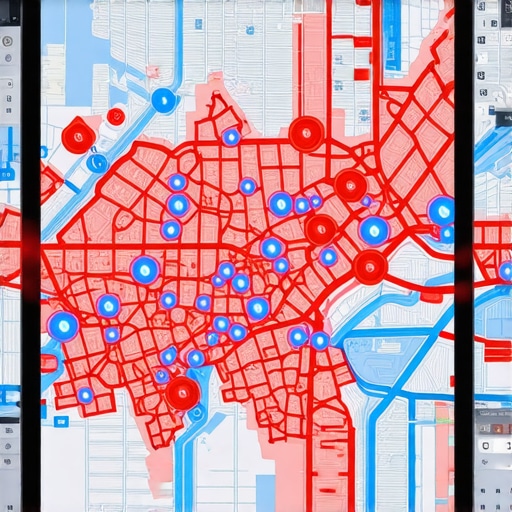
The proximity filter is a calculation that determines which businesses appear in the local pack based on the user’s current GPS location. When duplicate listings exist, this calculation breaks. The algorithm cannot decide which pin is the authoritative beacon for that specific coordinate set. This often leads to both listings being filtered out of the results entirely. If you are wondering why you are losing to competitors 5 miles away, it is likely because your proximity signal is muddy. In the logistics of search, clarity is more important than volume. A single, clean profile with accurate service area polygons will always outrank a mess of scattered pins. We look at the behavioral patterns of users. If they see two listings for the same brand, they hesitate. That hesitation is a signal to Google that your data is untrustworthy. The click through rate drops, and your ranking follows it down the drain.
Fixing brand confusion from merged listings
Managing multi location business profiles requires a strict hierarchy of data to prevent internal competition between branches. If you merge two companies or acquire a competitor, you must be aggressive in cleaning up the old brand assets. If you do not, you will face the reason your business stays stuck at 4 instead of breaking the top three. The algorithm struggles with brand confusion. If the old name still appears in the map pack, customers might call the wrong number or go to the wrong office. This creates negative user signals. Google tracks everything from phone call duration to the time it takes for a user to return to the search results. If a user calls a duplicate listing and gets a disconnected tone, your main listing suffers the penalty. It is a shared ecosystem. You must purge the old entities to protect the new ones.
The GMB audit and ranking toolkit
Comparing local listing tools reveals that most software is designed for maintenance rather than repair. A standard toolkit might show you that your NAP is eighty percent consistent, but it won’t tell you that the twenty percent inconsistency is what is killing your revenue. You need the exact toolkit needed for local map pack growth which includes proximity heat maps and citation scrapers. These tools allow us to see the world through the eyes of the algorithm. We can see where the signal breaks. We can see which specific directory is feeding the duplicate data back into the system. It is a game of cat and mouse with data aggregators. You fix it in one place, and it pops up in another. Only a dedicated audit can find the source of the leak.
“Local relevance is a function of trust; if the data is fragmented, the trust is non-existent.” – Location Intelligence Whitepaper
Recovering after moving city or service area
Stabilizing your local search presence after a relocation is a high stakes operation that requires perfect timing. If you verify a new address before the old one is properly marked as closed, you create a duplicate conflict. This is a common mistake for service area businesses. They try to claim both territories simultaneously. This is what we call an over aggressive location page strategy. It usually leads to service area businesses failing to show up in any town. The algorithm detects the attempt to game the system and suppresses all pins associated with the account. The road back is long. You have to prove your physical presence with video verification and lease agreements. It is better to do it right the first time than to spend months in the reinstatement war.