How to Stabilize Rankings After Changing Your Service Area
I spent three months fighting a hard suspension for a plumbing client whose listing was nuked simply because they shared a suite number with a defunct law firm. Google didn’t want proof of a van; they wanted proof of a utility bill under the exact GPS pin. As a logistics manager in the local search world, I treat every address change like a fleet dispatch. One wrong turn or one mismatched set of coordinates ruins the entire route. When a service business moves its center of operations, the map pin does not just slide across a screen. It tears through a complex web of existing trust signals that were anchored to a specific set of latitude and longitude points. If you do not manage this transition with forensic precision, you will see your Map Pack presence evaporate faster than a bad lead on a Friday night.
The ghost in the GPS coordinates
To stabilize rankings after changing your service area, you must update your business address in the Google Business Profile dashboard while simultaneously refreshing all primary citations and local schema on your website. This ensures that the proximity signals remain consistent across the local search ecosystem. Most business owners think the dashboard is the source of truth, but Google views it as a claim that must be verified by third party data. When the pin moves, the algorithm looks for a corresponding shift in the digital breadcrumbs left across the web. If your website still points to the old centroid, the ranking drop is inevitable. You are essentially telling the system that you exist in two places at once. This creates a logic conflict. The algorithm hates uncertainty. It will default to the competitor who has a stable, singular location signal. You can find more about the specific schema tags that help google trust your service area to prevent this exact type of conflict. Proximity is math. If the math does not add up between your profile and your site, you lose the Map Pack spot.
Why your physical address is a liability
Your physical address acts as the anchor for the proximity radius that Google uses to determine which businesses appear in the local 3 pack for a specific user. Moving that anchor even a few blocks can shift you out of the high-intent zone for your most profitable neighborhoods. In the logistics of local search, your address is not just where you receive mail. It is the zero point for a proximity filter. If you move away from the city center, you might find that you are why your business profile ranking tanked after moving cities because you have increased the travel time signal for the majority of users. Google calculates the physical distance between the user’s mobile device and your verified pin. If that distance exceeds a certain threshold, your relevance score drops regardless of your review count. I have seen businesses lose forty percent of their call volume just by moving across a highway. The road acts as a psychological and algorithmic barrier. To counter this, you need to use local seo services to recover from proximity based ranking drop that focus on building prominence signals to outweigh the distance penalty. Prominence is the only thing that can override a bad location.
“Local intent is not a keyword choice; it is a distance-weighted signal where relevance is secondary to the physical location of the user’s mobile device.” – Map Search Fundamental
The three mile radius that determines your revenue
The three mile radius surrounding your verified business pin is the primary zone where you will capture the highest conversion rates from mobile searches. Beyond this circle, your visibility depends heavily on your brand’s historical strength and the density of your competition. When you change your service area, you are effectively resetting the clock on this three mile zone. You need to re-verify your presence through customer check-ins and geo-tagged photos. I often tell my clients that a photo taken at the new office is worth ten reviews from five years ago. It proves you are actually there. If you are struggling with a sudden loss of visibility, check the 10-minute troubleshooting checklist for stalled business profiles to see if your new pin has actually been indexed. Sometimes the dashboard says you are live, but the spatial database is still lagging. This lag is where most businesses panic and start making too many changes. They change the name, they change the category, and then they trigger a suspension. Consistency is the only way to win back the trust of the Map Pack. You must verify that your how to fix the subtle nap errors costing your business local leads are corrected immediately.
Forensic evidence for the reinstatement team
Providing forensic evidence like utility bills, lease agreements, and photos of branded vehicles at the new location is the only way to recover a profile after a move-induced suspension. Google’s trust in service area businesses is at an all-time low due to map spam. If you move your address and your profile gets flagged, do not just click the appeal button. You need to gather a dossier. I have seen the reinstatement team reject a legitimate business because the name on the electric bill was slightly different than the business name on the profile. They want 1:1 parity. If you are using the specific steps for fast google business profile recovery, you know that the small details matter. Check your why picking the wrong primary category is the most common reason for ranking drops because a move often tempts owners to re-categorize. That is a mistake. Keep the category stable while the location settles. The logistics of a recovery require patience. You cannot rush a manual reviewer who is looking for a reason to deny your existence.
The logistics of service area polygons
Defining your service area through specific zip codes rather than a broad radius helps the algorithm understand exactly where your team is dispatched. A radius is a lazy signal. A list of zip codes is a data-rich signal. When you move, you must update these polygons to reflect your actual travel capability. If your website says you serve a town that is now two hours away, Google will flag the inconsistency. This is where how to build service area pages that actually stick in high competition suburbs becomes your primary strategy. You need new pages for the new neighborhoods. These pages should include local landmarks, specific street names, and mentions of local events. This anchors your website to the new physical reality of your business. I have seen this move double the call volume for contractors who were previously invisible in their own backyard. It is about proving local relevance through content that humans actually want to read, while giving the bot the entities it needs to rank you. [IMAGE_PLACEHOLDER]
A toolkit for proximity recovery
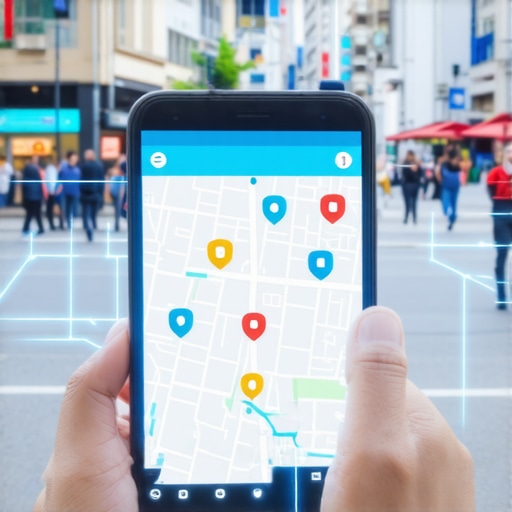
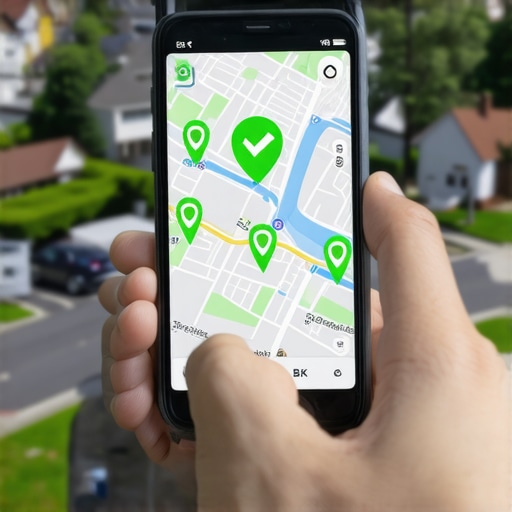
A robust gmb ranking toolkit should include map trackers, citation auditors, and local search grid tools to visualize where your ranking is dropping after an address change. You cannot fix what you cannot see. If you are flying blind, you might be optimizing for a neighborhood where you already rank while ignoring the one where you just lost the top spot. I recommend using the simple toolkit for improving your local map rankings fast to get a clear picture of your new proximity map. These tools show you a grid of pins across your city. Green pins mean you are in the top three; red pins mean you are nowhere. After a move, you will likely see a red shadow creeping in from your old location. To fight this, you need 3 essential tools for auditing map rankings without an enterprise budget. Use them to identify exactly where the signal is breaking. Is it a lack of local reviews from the new area? Is it an old Yelp listing still pointing to the old suite? The toolkit reveals the gaps in your logistics. Once you find the gap, you can deploy the fix.
“Proximity is the strongest ranking factor in the local pack, and any disruption to the business address will trigger an immediate re-evaluation of the entire prominence score.” – Vicinity Update Analysis
Future proofing the dispatch logic
Future proofing your local rankings requires moving beyond simple address updates and focusing on behavioral signals like high click-through rates and rapid response times. By 2026, the physical pin will matter less than the real-time location of your service vehicles. Google is already experimenting with integrating fleet data into search results. If you want to stay ahead, you need to optimize for how response time became a critical signal for 24-hour service rankings. The faster you respond to a lead through the profile, the more Google trusts that you are an active, local entity. Don’t just settle for a new address. Build a presence that makes the address irrelevant. This means getting how to get authentic customer reviews fast without triggering a spam filter in your new neighborhood immediately. Send your techs out with a mission to get photos and reviews from every job within five miles of the new office. This creates a new cluster of data points that tells the algorithm you have successfully relocated your authority. The logistics of the Map Pack are always shifting. If you stay stationary, you get left behind. If you move, move with a plan. Your revenue depends on that pin staying green.